
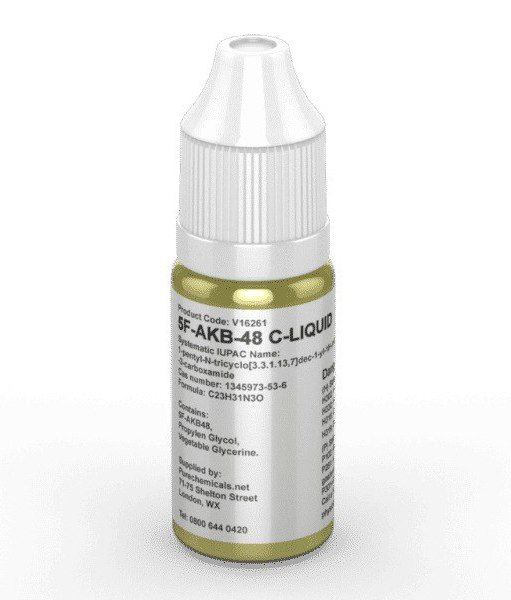
5F-AKB-48 C Liquid
Price range: $222.00 through $2,010.00
Description
5F-AKB-48 C Liquid: Chemical Overview and Safety Guide
5F-AKB-48 C Liquid is a product name associated with synthetic cannabinoid terminology. Understanding a product described by this name requires careful attention to chemical identification, composition, potential health risks, and applicable regulations.
Synthetic cannabinoids are laboratory-produced substances that can interact with the body’s cannabinoid receptors. Their effects may differ substantially from those of naturally occurring cannabinoids, and some have been associated with severe, unpredictable adverse reactions.
This guide explains the terminology, the importance of chemical verification, relevant safety considerations, and the legal issues associated with synthetic cannabinoid products.
What Is 5F-AKB-48 C Liquid?
The name 5F-AKB-48 C Liquid appears to refer to a liquid product associated with the synthetic cannabinoid known as 5F-AKB-48. However, the precise composition of a product sold under this name cannot be established from the product label alone.
The designation “5F” is associated with a fluorinated chemical structure in the naming of certain synthetic cannabinoids. Nevertheless, the name does not independently confirm the identity, concentration, purity, or other ingredients of a particular liquid.
Reliable analytical documentation is necessary to establish what a product contains. For further information about the website, visit the K2Spice.co homepage.
Understanding Synthetic Cannabinoids
Synthetic cannabinoids form a broad category of laboratory-produced chemicals investigated in analytical chemistry, forensic science, and toxicology. Their chemical structures and biological properties vary, meaning information about one compound cannot automatically be applied to another.
Chemical Composition and Identification
A product’s composition is an important consideration when assessing chemical information. Labels and marketing descriptions may not provide sufficient evidence to establish the identity or concentration of the substance.
Appropriate laboratory testing can help identify chemical constituents and distinguish between related compounds. Documentation should be authentic, relevant to the specific batch, and supported by suitable analytical methods.
Interaction With Cannabinoid Receptors
The body’s endocannabinoid system participates in physiological processes involving memory, mood, appetite, and other functions. CB1 and CB2 receptors are important components of this system.
CB1 receptors are found predominantly in the central nervous system and contribute to neurological processes. CB2 receptors are associated with immune signaling and occur in immune cells and other tissues.
The precise receptor activity and biological effects of a particular substance require compound-specific scientific evidence. They should not be inferred from a product name alone.
Potential Health Risks and Safety Considerations
Synthetic cannabinoids can cause serious adverse reactions. Depending on the compound and circumstances of exposure, reported problems across this category include agitation, confusion, rapid heart rate, seizures, and other potentially life-threatening complications.
Several considerations are important when evaluating information about an unidentified liquid:
- Uncertain composition: A product name does not establish which chemicals are present.
- Concentration uncertainty: The amount of an active substance cannot be reliably determined from appearance or packaging.
- Unpredictable reactions: The effects of synthetic cannabinoids can differ substantially between compounds and individuals.
- Limited evidence: The long-term effects of some synthetic cannabinoids remain insufficiently characterized.
Avoid consuming unidentified synthetic cannabinoid products. If serious symptoms occur following suspected exposure, seek urgent medical attention.
Chemical Verification and Product Documentation
Reliable documentation is important when assessing claims about a chemical product. A certificate of analysis should identify the tested material, specify the analytical methods used, and correspond to the relevant batch.
A certificate or laboratory report should not automatically be interpreted as proof that a substance is safe for human consumption. Chemical identification and safety assessment are separate questions.
Product descriptions should avoid unsupported claims about purity, concentration, potency, or expected effects unless appropriate evidence is available.
Legal Status of Synthetic Cannabinoid Liquids
The legal status of synthetic cannabinoids varies by country and jurisdiction. Some compounds are specifically controlled, while broader laws may cover related substances or certain psychoactive chemicals.
The legal position of a liquid product may depend on its actual chemical composition rather than the name printed on its packaging. Check current official regulations before possessing, importing, transporting, or conducting research involving a suspected synthetic cannabinoid.
Frequently Asked Questions
1. What is 5F-AKB-48 C Liquid?
It is a product name associated with synthetic cannabinoid terminology. Its exact chemical composition should be verified through reliable documentation rather than assumed from the label.
2. Is 5F-AKB-48 C Liquid the same as 5F-AKB-48?
The product name suggests a connection, but it does not independently establish that the liquid contains the named compound or confirm its concentration and purity.
3. How can the composition of a synthetic cannabinoid liquid be verified?
Appropriate laboratory analysis and batch-specific documentation can help establish the identity of the chemical constituents. Appearance and product descriptions are not sufficient.
4. What are the potential risks of synthetic cannabinoids?
Depending on the substance, exposure may cause serious neurological, psychological, or cardiovascular effects. Risks cannot be accurately assessed from a product name alone.
5. Is 5F-AKB-48 C Liquid legal?
Its legal status depends on the actual substance and the laws applicable in the relevant jurisdiction. Consult current official regulations rather than relying on marketing claims.
6. Does a certificate of analysis guarantee safety?
No. A certificate may provide information about a tested sample, but it does not automatically establish that a substance is safe for human consumption or that every batch has the same composition.
Conclusion
5F-AKB-48 C Liquid highlights the importance of distinguishing a product’s marketing name from its verified chemical identity. Reliable identification, careful interpretation of scientific evidence, and awareness of potential health risks are essential when evaluating information about synthetic cannabinoids.
Readers should rely on appropriate analytical documentation and current official regulations rather than unsupported claims about composition, effects, or safety.
Additional information
| Quantity | 50ml, 100ml, 200ml, 250ml, 500ml, 1000ml |
|---|
Related products
- LIQUID HERBAL INCENSE
BIZARRO LIQUID INCENSE 5ML
- Price range: $25.00 through $250.00
- Select options This product has multiple variants. The options may be chosen on the product page
- LIQUID HERBAL INCENSE
Angry Birds Liquid Incense
- Price range: $70.00 through $700.00
- Select options This product has multiple variants. The options may be chosen on the product page
- LIQUID HERBAL INCENSE
1 Gallon Liquid K2
- Price range: $6,000.00 through $60,000.00
- Select options This product has multiple variants. The options may be chosen on the product page


Reviews
There are no reviews yet.