Understanding Lysergic Acid Diethylamide: Chemistry, Dosing, and Legal Realities
If you are researching terms like LSD for sale or searching online to buy LSD near me, it is critical to separate popular culture narratives from scientific, medical, and legal realities. Lysergic acid diethylamide (commonly known as acid) is a highly potent synthetic psychedelic drug that drastically alters perception, thoughts, and feelings.
This guide provides an objective, evidence-based breakdown of LSD’s chemical composition, standard illicit distribution methods (such as 220ug blotter sheets), its legal classification, and the profound health risks associated with its use.
What is LSD?
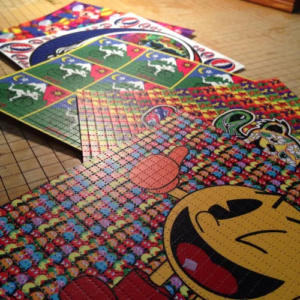
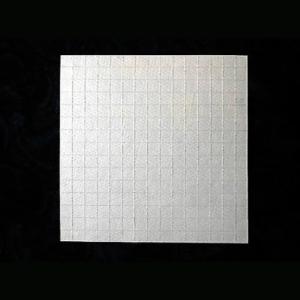
Because of its extreme potency, liquid LSD is typically diluted and applied to absorbent paper known as blotter sheets. It is also distributed as small gelatin squares (“windowpanes”), tablets (“microdots”), or in liquid vials.
The Reality of Dosing: Blotter Sheets and the “220ug” Metric
A common focus in online searches is the concentration of specific doses, such as 220 ug or 220ug lsd. Users often look for buy lsd 220ug sheets hoping to find standardized, predictable dosages.
However, in the unregulated illicit market, dosage claims are highly untrustworthy:
Mislabeling and Unpredictability: Blotter sheets marketed as lsd 220ug are frequently exaggerated by sellers to justify higher prices. Conversely, some doses genuinely containing a high concentration can overwhelm an individual, leading to severe psychological crises.
Alternative Research Chemicals: Because raw LSD is difficult to synthesize, illicit markets often distribute dangerous synthetic research chemicals—such as 25I-NBOMe or “N-Bomb”—on blotter paper instead. Unlike pure LSD, compounds like 25I-NBOMe carry a high risk of fatal physical toxicity, vasoconstriction, and organ failure.
Is LSD Legal?
The legal status of LSD is absolute. In the United States, the Drug Enforcement Administration (DEA) classifies LSD as a Schedule I Controlled Substance under the Controlled Substances Act.
This classification makes it completely illegal to manufacture, distribute, possess, or purchase LSD. Attempting to locate LSD for sale online, via unauthorized platforms, or searching for domestic sources carries severe federal and state criminal penalties, including mandatory minimum prison sentences and heavy fines. Additionally, attempting to access these substances through rogue or unverified online channels exposes consumers to physical safety threats, financial fraud, and cyber security exploits.
Psychological and Physical Health Risks
LSD acts primarily as an agonist at serotonin receptors, particularly the $5-\text{HT}_{2\text{A}}$ receptor, which triggers profound alterations in sensory perception and cognitive processing. The effects are highly unpredictable and heavily influenced by the user’s mindset (“set”) and physical surroundings (“setting”).
Immediate Risks:
Impaired Judgment: Acute hallucinations and dissociation can lead to extremely hazardous behaviors, leading to accidental self-harm or fatal injuries.
Physical Strain: Increased heart rate, elevated blood pressure, hyperthermia (high body temperature), sweating, and tremors.
Long-Term Risks:
Persistent Psychosis: For individuals with an underlying predisposition to mental health disorders (such as schizophrenia), LSD use can trigger prolonged or permanent psychotic episodes.
Hallucinogen Persisting Perception Disorder (HPPD): A chronic condition where individuals experience spontaneous recurrences of sensory disturbances (such as “flashbacks” or visual halos) months or years after their last use, causing severe distress and functional impairment.
Frequently Asked Questions (FAQs)
What does “ug” mean in relation to LSD?
The term “ug” represents micrograms ($\mu\text{g}$), which is one-millionth of a gram. Because LSD is extremely potent, its active doses are measured in micrograms. A standard single dose typically ranges from $50\,\mu\text{g}$ to $100\,\mu\text{g}$.
Can you test blotter paper to verify if it is real LSD?
Yes. Forensic laboratories and harm-reduction organizations use chemical reagent tests (such as the Ehrlich or Hofmann reagents) or advanced analytical equipment like liquid chromatography to verify if a substance on blotter paper is actually LSD or a highly dangerous synthetic substitute like 25I-NBOMe.
Is it legal to buy LSD online?
No. LSD is a Schedule I Controlled Substance globally. Attempting to purchase LSD online or searching for unverified digital vendors carries severe criminal penalties, high risks of purchasing contaminated or lethal chemical substitutes, and financial fraud
- LSD for sale
Buy 1P-LSD Blotters 150mcg
- Price range: $35.00 through $420.00
- Select options This product has multiple variants. The options may be chosen on the product page
- LSD for sale
Buy 1P-LSD Blotters 250mcg
- Price range: $35.00 through $420.00
- Buy 1P-LSD Blotters 250mcg Are you trying to find 1P-LSD to buy? Learn about our premium 1P-LSD Blotters, which are only available at k2spice.co and are dosed at 250 mg each
- Select options This product has multiple variants. The options may be chosen on the product page
- LSD for sale
Buy LSD 220ug Sheets
- Price range: $180.00 through $1,010.00
- Select options This product has multiple variants. The options may be chosen on the product page