Table of Contents
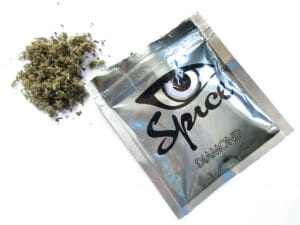
If you’ve walked past a gas station counter and seen a foil packet labeled “herbal incense,” “potpourri,” or “not for human consumption,” you’ve likely seen K2 or Spice. The bright packaging and the nickname “fake weed” make these products look like a mild, legal stand-in for cannabis.
They aren’t. K2 and Spice belong to a class of lab-made chemicals called synthetic cannabinoids, and the medical literature is blunt about them: research links illicit synthetic cannabinoid use to severe health problems and outcomes that can be life-threatening. The gap between how these products are marketed and what they actually do to the body is one of the widest in modern drug policy.
This guide covers what K2 and Spice are, why they’re more dangerous than the cannabis they imitate, how to recognize use and overdose, where the law stands, and how to get help.
What Are K2 and Spice?
K2 and Spice are brand names that became catch-all terms for products made by spraying synthetic cannabinoid chemicals onto dried plant material. These chemicals are applied to otherwise harmless herbs to imitate the euphoric effects of cannabis, then packaged and sold under dozens of names.
The plant matter itself is inert — oregano, damiana, marshmallow leaf, whatever is cheap. The active drug is entirely in the chemical coating.
These days, the chemicals are also dissolved into liquid and loaded into vape cartridges, alongside the traditional smokable shredded-plant version. That shift matters: a vape cartridge looks identical to a legal nicotine or THC product, which makes detection far harder for parents and school staff.
The Names Keep Changing
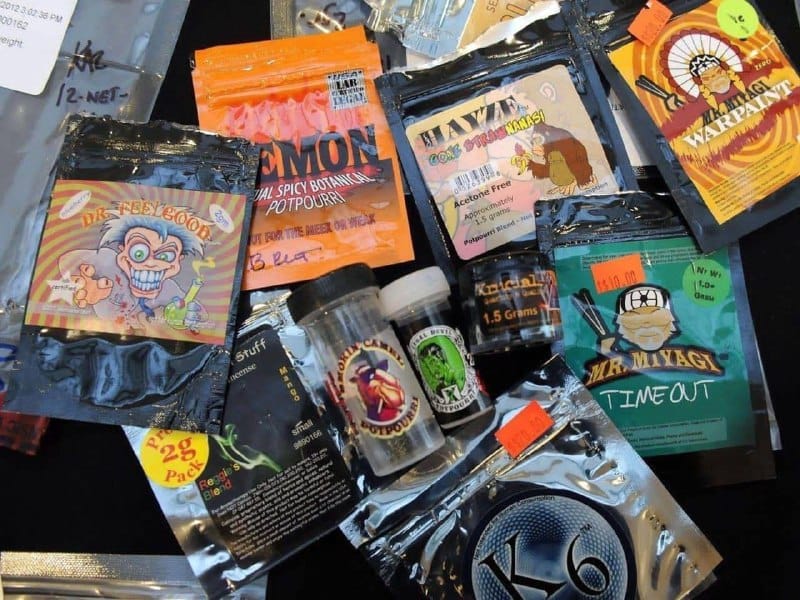
Part of what makes these products hard to police is that the branding rotates constantly. Products have appeared under names including Red X Dawn, Black Magic, Mr. Nice Guy, Ninja, Skooby Snax, Crazy Clown, Genie, and Serenity, among many others. Black Mamba and Bombay Blue are also common. DEAsvgnihsvg
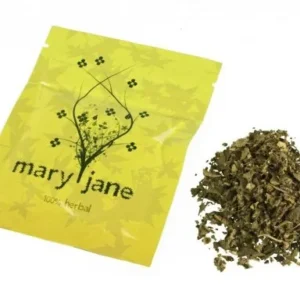
If you’re trying to memorize a list of street names, you’ll always be a step behind. It’s more useful to recognize the format: small foil or mylar pouches, cartoonish graphics, vague “incense” or “aromatherapy” labeling, and a disclaimer that the contents aren’t meant to be consumed.
Where They Came From
The chemistry has an unusual origin story. Synthetic cannabinoids were developed for legitimate research — scientists needed compounds that bind to cannabinoid receptors so they could study how those receptors work, at a time when studying cannabis itself was legally difficult. The published formulas then escaped the lab. Amateur chemists took those research recipes and began producing their own variants, and most of the product now circulating is manufactured overseas with essentially no quality control.
The products were introduced in Europe around 2004 as a supposedly legal cannabis alternative and spread through online sellers, gas stations, and convenience stores.
Why “Fake Weed” Is a Dangerous Misnomer
The comparison to cannabis is the single most misleading thing about these products. Three differences drive nearly all of the harm.
1. They’re Vastly More Potent
THC, the main psychoactive compound in cannabis, is a partial agonist at cannabinoid receptors — it activates them only partway, which puts a natural ceiling on its effects. Most synthetic cannabinoids are full agonists, meaning they activate those receptors completely. Because they act as full agonists, they are far more potent than natural cannabis and have been increasingly tied to acute and chronic poisonings and deaths; many are 10 to 200 times stronger than THC.
That ceiling removal is why you hear about seizures and cardiac events with K2 but not with cannabis flower.
2. Nobody Knows What’s in Any Given Packet
There is no recipe. Because these products are unregulated and non-standardized, the actual chemicals vary from product to product, and some batches contain far higher concentrations than others — variability that drives the risk of overdose and toxicity.
Two packets from the same brand, bought the same day, can contain different compounds at different strengths. Contamination compounds the problem: packages have been found to contain pesticides, rat poison, and fentanyl.
3. The Chemistry Is a Moving Target
Every time regulators ban a specific compound, manufacturers tweak the molecule. Synthetic cannabinoids are the largest category of new substance detected by European drug monitoring, with 207 distinct compounds identified between 2008 and October 2020.
Each new variant arrives with zero human safety data. Toxicity research has found that newer-generation compounds carry a higher rate of neuropsychiatric symptoms than earlier ones — the chemicals are getting more dangerous, not less.
Health Effects: What the Research Shows
Short-Term Effects
Poison control centers and state health departments have logged a consistent cluster of acute effects. These include rapid heart rate, elevated blood pressure, tremors, seizures, vomiting, hallucinations, agitation, anxiety, numbness and tingling, pallor, and loss of consciousness.
Clinical summaries add impaired thinking, drowsiness, nausea, paranoia, and fear to the common side-effect list. Notably absent is the mellow, predictable experience users expect from cannabis.
Severe and Life-Threatening Effects
Documented severe outcomes include acute kidney injury, seizures, psychosis, cardiotoxicity, coma, and death. Overdose can bring on severe vomiting, agitation, seizures, stroke, kidney damage, coma, and death — and even small amounts can trigger psychosis, paranoia, and violent behavior. nihsvgWebMDsvg
A systematic review of the toxicology literature found a specific pattern: across 64 papers reporting effects in humans, fourteen studies documented deaths associated with synthetic cannabinoid use, with rapid heart rate and seizures the most commonly reported toxic effects.
Lasting Damage
This is the part most users don’t anticipate. In some cases, psychosis, paranoia, and other severe effects persist after a person stops using. Health authorities have noted that adverse effects can be long-lasting even after use ends. WebMDsvgDEAsvg
Risk isn’t evenly distributed. Researchers concluded that synthetic cannabinoids may be more toxic than THC with longer-lasting effects, and are especially hazardous for people with epilepsy or schizophrenia because of the elevated risk of triggering neurological and psychiatric episodes.
Dependence and Withdrawal
The “it’s just herbal” framing also obscures addiction risk. Evidence indicates synthetic cannabinoids carry higher addiction potential than cannabis. Dependence and withdrawal are recognized serious effects, and people attempting to quit often report anxiety, irritability, insomnia, sweating, nausea, and intense cravings. nihsvgWebMDsvg
Why People Use Them
Understanding the appeal matters if you want prevention messaging that lands.
Users have cited two main reasons: these products were cheaper and easier to get than cannabis, and they largely don’t show up on routine urine drug screens.
That second point explains why synthetic cannabinoid use clusters in specific populations — people on probation or parole, those in drug-tested employment, military personnel, and people in institutional settings. For someone facing a consequence tied to a positive test, an undetectable substitute is a powerful draw. It’s also why “you’ll get caught” is a weak deterrent message and “this can cause permanent kidney damage” is a strong one.
Warning Signs to Watch For
Physical and Behavioral Indicators
- Agitation or aggression that seems disproportionate and comes on suddenly
- Confusion, slurred speech, or difficulty forming coherent thoughts
- Racing heart, visible tremors, or unusual pallor
- Vomiting without other illness
- Paranoia, hallucinations, or talking to people who aren’t there
- Extreme drowsiness alternating with agitation
- Rapid mood swings in people with no history of them
Physical Evidence
- Small foil or mylar packets with brand-style graphics
- Products labeled “herbal incense,” “potpourri,” or “aromatherapy” that show signs of being opened and used
- “Not for human consumption” labeling
- Unfamiliar vape cartridges, especially unbranded ones
- Pipes or rolling papers alongside products that aren’t cannabis
When to Call for Emergency Help
Call emergency services immediately if someone who may have used K2 or Spice shows any of the following:
- Seizure activity
- Loss of consciousness or inability to be woken
- Chest pain or a heart rate that is racing or irregular
- Difficulty breathing
- Severe confusion, hallucinations, or agitation
- Signs of stroke — facial drooping, one-sided weakness, sudden speech difficulty
- Reduced or absent urination, or severe back and flank pain, which can indicate kidney injury
Tell responders that a synthetic cannabinoid may be involved. There is no antidote, and treatment is supportive, so knowing the likely substance helps clinicians anticipate seizures and cardiac complications rather than treating it as a routine cannabis intoxication.
Do not wait to see if symptoms pass. Because potency varies so wildly between batches, a reaction can escalate quickly.
Legal Status
The legal picture is genuinely confusing, and that confusion is by design on the manufacturers’ part.
In the United States, many specific synthetic cannabinoid compounds are controlled at the federal level, and the Federal Analogue Act allows prosecution for substances substantially similar to scheduled drugs. Most states have added their own bans, many written broadly to cover chemical families rather than individual molecules.
But there’s a persistent lag. A compound banned this year gets replaced by a tweaked version that isn’t yet named in any statute, and that version sells openly until the law catches up. That temporary window is what lets retailers claim a product is “legal.”
Legal availability says nothing about safety. These substances have no approved medical use and no FDA approval for any purpose. A product can be technically unscheduled and still cause a fatal seizure.
The same dynamic now plays out with newer semi-synthetic cannabinoids. HHC appeared in the US market in September 2021 and in Europe by May 2022, with additional derivatives like HHC acetate and hexahydrocannabiphorol identified in 2023 — and little is known about their health risks. Different chemistry, same regulatory race.
Getting Help for K2 and Spice Use
Stopping is the single most effective step for avoiding lasting damage. Because withdrawal can involve significant anxiety, agitation, and insomnia — and because the psychiatric effects can outlast use — medical supervision is worth seeking rather than going it alone.
Practical starting points:
Talk to a primary care provider. They can assess for kidney function, cardiac effects, and psychiatric symptoms, and refer onward. Be honest about what was used; clinicians are not in the business of reporting patients.
Use a treatment locator. In the US, SAMHSA maintains a free, confidential National Helpline (1-800-662-4357) and an online treatment locator that filters by location, insurance, and level of care.
Consider the psychiatric piece specifically. If paranoia, hallucinations, or mood changes persist after stopping, that warrants psychiatric evaluation rather than waiting it out.
Address the reason for use. If the draw was passing drug tests, the underlying pressure — probation conditions, employment requirements — needs its own plan, or the substitution logic returns.
For families: confrontation framed around punishment tends to drive use underground, which is the worst outcome given how unpredictable these substances are. Framing around the specific medical risks — kidney failure, seizures, lasting psychosis — gives someone a concrete reason to stop that doesn’t depend on getting caught.
The Bottom Line
K2 and Spice are not a legal version of cannabis. They are an ever-changing set of unregulated industrial chemicals, many times stronger than THC, sprayed onto plant matter by manufacturers with no safety oversight and sometimes contaminated with substances including fentanyl. The health effects are unpredictable, harmful, and potentially fatal.
The marketing works precisely because it sounds harmless. The medical evidence says otherwise, consistently, across dozens of studies and hundreds of poison control reports.