If you’ve come across the term “K2 spray” — maybe in a news story, a school warning, or a worried search after finding something you didn’t recognize — you’re asking about one of the more dangerous and misunderstood substances circulating right now. It’s not a spray in the sense of air freshener or bug repellent. It’s the liquid form of a synthetic drug that’s been linked to mass hospitalizations, unpredictable psychiatric episodes, and a growing list of overdose deaths — and it’s often hiding in plain sight, disguised as something completely mundane.
What Is K2 Spray, Exactly?
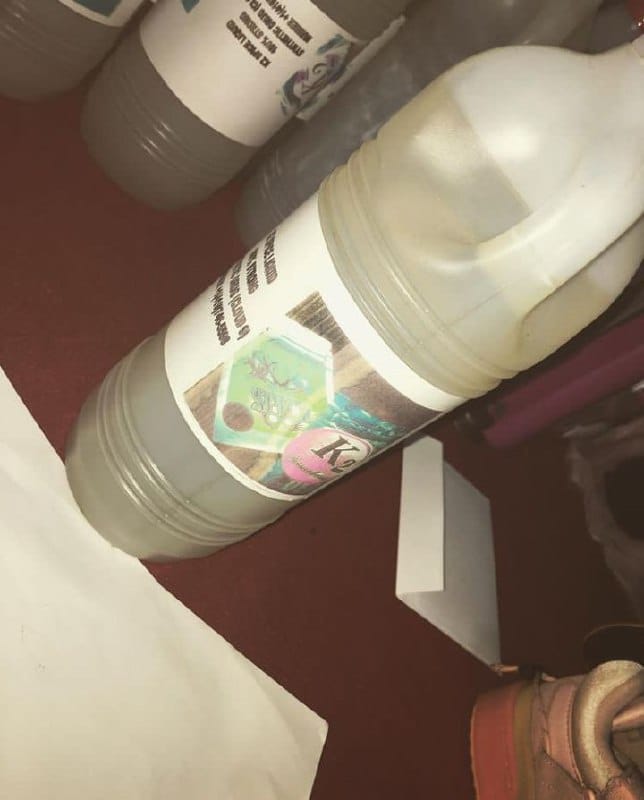
K2 spray refers to the liquid form of synthetic cannabinoids — the same family of lab-made chemicals behind the “K2” and “Spice” products more commonly seen as sprayed plant material. NIDA describes the basic category plainly: <cite index=”11-1″>synthetic cannabinoids are human-made mind-altering chemicals that are either sprayed on dried, shredded plant material so they can be smoked or sold as liquids to be vaporized and inhaled in e-cigarettes and other devices.</cite> That liquid version — sometimes sold under names like “liquid incense,” “K2 spray,” or “K2 juice” — is exactly what this post is about.
So when people talk about “K2 spray,” they’re really talking about a concentrated liquid chemical cocktail — engineered in a lab, with no natural plant origin — designed to be applied to something else (paper, plant material, an e-cigarette cartridge) or inhaled directly through a vaping device.
How K2 Spray Actually Gets Used
There are a few distinct ways this liquid ends up being consumed, and understanding them helps explain why K2 spray shows up in so many unexpected places.
Sprayed onto plant material. This is the classic, most well-known method — the one behind the original “herbal incense” packets sold at gas stations and smoke shops for years. The DEA describes it directly: <cite index=”16-1″>spraying or mixing the synthetic cannabinoids on plant material provides a vehicle for the most common route of administration — smoking (using a pipe, a water pipe, or rolling the drug-laced plant material in cigarette papers).</cite> The plant material itself — often just dried herbs with no psychoactive properties of its own — is simply a delivery vehicle for the liquid chemical that’s actually doing something.
Vaped directly through e-cigarettes. This is where the “spray” or “liquid” form really comes into its own, and it’s a growing concern given how normalized vaping has become, especially among teens. NIDA notes that <cite index=”13-1″>illicitly manufactured synthetic cannabinoids are typically added to liquid cartridges used in vaping devices or added to dried, shredded plant material so they can be smoked.</cite> A federal drug resource echoes this, noting <cite index=”16-1″>in addition to the cannabinoids laced on plant material and sold as potpourri and incense, liquid cannabinoids have been designed to be vaporized through both disposable and reusable electronic cigarettes.</cite> Because a vape device is such an ordinary, socially unremarkable object these days, this route of use is genuinely harder to spot than someone smoking a joint or pipe.
Soaked into paper. This is a method that’s picked up a disturbing amount of traction, particularly in correctional settings but not exclusively there. Liquid K2 can be soaked directly into ordinary paper — letters, drawings, even book pages — then dried so it looks completely unremarkable. Once it reaches someone, it gets torn into pieces and smoked or ingested. Because the liquid form is what makes this method possible in the first place, K2 spray is really the raw material behind this entire smuggling technique.
Why K2 Spray Is So Much More Concerning Than It Sounds
If your instinct is that a “spray” sounds less serious than smoking dried plant material, it’s worth correcting that assumption right away. If anything, the liquid form comes with its own additional layer of risk on top of everything already true about synthetic cannabinoids generally.
You genuinely cannot know what’s in it, or how strong it is
This is the single biggest reason to take K2 spray seriously. One government drug resource is blunt about it: <cite index=”12-1″>dangerous to purchase from the Internet because its origins and chemical amounts are unknown. The ingredients and strength of products containing synthetic cannabinoids are almost impossible for the user to know.</cite>
Unlike a regulated product with a label you can trust, K2 spray is manufactured with zero quality control, frequently overseas, and sold through channels that have every incentive to avoid scrutiny rather than provide accurate information. There’s no way to verify concentration, purity, or even which specific chemical compound is in a given bottle — and as covered below, that specific compound matters enormously, because different synthetic cannabinoid variants carry wildly different levels of danger.
It’s chemically much more aggressive than natural THC
A systematic review of the toxicology research on this drug class is direct about the comparison: <cite index=”15-1″>evidence shows that using SCs [synthetic cannabinoids] products leads to greater health risks than cannabis. They have been associated with greater toxicity and higher addiction potential unrelated to the primary psychoactive component of marijuana.</cite> The same review notes just how serious the historical track record is, pointing out that <cite index=”15-1″>early cases of intoxication and death related to SCs highlight the inherent danger that may accompany the use of these substances.</cite>
It’s a constantly moving chemical target
“K2″ was never one single formula, and the liquid version is no exception. A toxicology review notes <cite index=”15-1”>currently, there are hundreds of SCs known, and the SCs market is constantly evolving, so new compounds are continually being developed.</cite> Manufacturers regularly tweak the chemical structure of the compounds used, partly to stay ahead of drug laws and partly to stay ahead of testing technology. That means a bottle of K2 spray bought today could contain a meaningfully different — and potentially more dangerous — chemical than one bought under an identical label a few months ago.
The health effects go well beyond what people associate with a cannabis high
Multiple government and clinical resources document a strikingly severe list of adverse effects tied to synthetic cannabinoid use. A federal drug fact sheet lists <cite index=”16-1″>tachycardia (elevated heart rate), elevated blood pressure, unconsciousness, tremors, seizures, vomiting, hallucinations, agitation, anxiety, pallor, numbness, and tingling</cite> among the documented reactions. NIDA states plainly that <cite index=”13-1″>research shows use of illicit synthetic cannabinoids is associated with severe health problems and can be life-threatening.</cite>
It’s often chosen specifically because it’s hard to detect
This is a less obvious but genuinely important concern. NIDA notes that people using these products have <cite index=”13-1″>reported using these products because they were sometimes cheaper and more accessible alternatives to cannabis and are mostly undetected by routine urine drug screens.</cite> A case report on a K2-related lung injury echoes the same point, noting the danger is compounded by <cite index=”20-1″>the nature of synthetic cannabinoids to go undetected on standard urine toxicology panels.</cite>
This detectability gap means K2 spray has historically attracted a specific set of users — people on probation, in the military, in safety-sensitive jobs, or otherwise subject to routine drug testing — who have a strong incentive to use something a standard test won’t catch. That’s worth sitting with for a second: a meaningful part of this drug’s appeal has never really been about a better experience. It’s been about evading detection, which says nothing good about how safe the substance actually is.
It’s specifically marketed to look legal and harmless
The packaging and branding around K2 spray is designed to disarm suspicion, not raise it. A federal fact sheet explains the tactic directly: <cite index=”19-1″>synthetic cannabinoids, commonly known as “synthetic marijuana,” “K2,” or “Spice,” are often sold in legal retail outlets as “herbal incense” or “potpourri”… they are labeled “not for human consumption” to mask their intended purpose and avoid Food and Drug Administration (FDA) regulatory oversight of the manufacturing process.</cite>
It’s genuinely popular among teens and young people
This isn’t a fringe concern limited to a small subculture. A federal fact sheet notes that <cite index=”19-1″>use of synthetic cannabinoids is alarmingly high, especially among young people,</cite> citing a national youth survey in which <cite index=”19-1″>one in nine 12th graders in America reported using synthetic cannabinoids in the past year.</cite> More recent trends suggest the concern hasn’t gone away — a drug information resource notes that <cite index=”14-1″>more recent trends show that synthetic cannabinoid use, including vaping forms, has increased again in some adolescent groups from 2021 to 2023, raising new public health concerns,</cite> and that these products <cite index=”14-1″>remain attractive to teens due to factors like perceived legality, lower cost, and difficulty detecting them on drug tests.</cite> The specific mention of “vaping forms” here points squarely at K2 spray as part of this renewed concern, since vape devices are exactly where the liquid version of this drug shows up.
What Effects Does K2 Spray Actually Produce?
A youth-focused resource on K2 describes the general effect profile: <cite index=”18-1″>people using synthetic cannabinoids report some effects similar to those produced by marijuana, such as elevated mood, relaxation and altered perception.</cite> But that same resource is quick to flag how differently things can go from there: <cite index=”18-1″>although these products are often marketed as “safe” alternatives to marijuana, they may affect the brain much more powerfully than marijuana. Their effects can be unpredictable and severe.</cite>
Is K2 Spray Legal?
The legal picture here is genuinely messy, and that messiness is part of the problem. A federal fact sheet notes that <cite index=”19-1″>Congress and the Drug Enforcement Administration (DEA) have taken steps to ban many of these substances at the Federal level,</cite> and that <cite index=”19-1″>many states have also taken action to control synthetic drugs, including synthetic cannabinoids.</cite>
But because regulation has historically targeted specific named chemical compounds rather than the entire category, and because manufacturers keep tweaking formulas to stay one step ahead of the law, there’s frequently a gap between what’s actually being sold and what’s explicitly illegal at any given moment. A toxicology review notes that synthetic cannabinoids are classified as <cite index=”15-1″>new psychoactive substances (NPS), which are not entirely controlled by the United Nations drugs conventions</cite> — a reflection of just how much this category has outpaced global drug regulation frameworks. In practice, this means a bottle of K2 spray might be technically unregulated in a given jurisdiction simply because the specific chemical inside hasn’t been named in law yet, not because anyone has determined it’s actually safe.
Why the “Not for Human Consumption” Label Should Worry You, Not Reassure You
What to Do If You’re Concerned About K2 Spray Use
If you suspect someone you care about has been using K2 spray — whether through a vape device, sprayed plant material, or another delivery method — here are some concrete starting points.
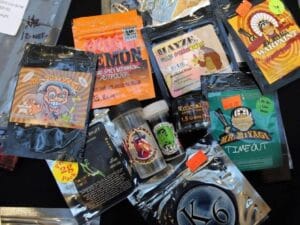
Look for the environmental clues. Small colorful pouches or bottles labeled “incense,” “potpourri,” or “not for human consumption,” vape devices with unfamiliar liquid, or a marijuana-like smell despite denial of cannabis use are all worth paying attention to.
Take severe symptoms seriously immediately. Seizures, chest pain, loss of consciousness, or severe psychiatric symptoms like delusions or hallucinations warrant an immediate call to 911 — these aren’t symptoms to wait out.
Don’t rely on a clean drug test as reassurance. As covered above, standard drug panels are generally not built to catch synthetic cannabinoids, so a negative test result doesn’t rule out use.
Approach the conversation with curiosity, not just confrontation. Because K2 spray has historically appealed to people specifically trying to avoid detection — whether due to a job, legal supervision, or a desire to hide drug use from family — there’s often an underlying reason someone reached for this particular substance. Understanding that reason tends to open up a more productive conversation than leading with accusation alone.
Common Questions About K2 Spray
Can K2 spray be added to a regular vape without someone realizing? This is one of the more concerning aspects of the liquid form. Because it’s designed specifically to be vaporized through standard e-cigarette devices, K2 spray can be used in ordinary-looking vape pens, and unless someone is specifically looking for it, there’s often little to visually distinguish a cartridge containing synthetic cannabinoids from one containing a legal nicotine or THC vape liquid.
Why does the liquid form seem to be growing in popularity? Vaping in general has become far more socially normalized and easier to conceal than smoking, and K2 spray has ridden that same wave. It’s also worth remembering that liquid forms tend to be marketed under the same kind of harmless-sounding branding as the plant-based products, which keeps the perceived risk artificially low for a lot of users, especially younger ones.
What makes the liquid form potentially more dangerous than smoked K2? It’s not necessarily that the underlying chemicals are different — often they’re the same or similar synthetic cannabinoid compounds. The added risk with liquid K2 comes from dosing: with a vape, there’s no visual reference for how much of the chemical you’re actually inhaling per puff, unlike sprayed plant material where at least the physical amount being smoked is somewhat visible. That makes it easier to unintentionally consume a much larger dose than intended, especially given how inconsistent the concentration can be from one batch to the next.
Is there a safe way to use K2 spray? No. Because there’s no regulation, no quality control, and no reliable way to know the actual chemical composition or concentration of any given product, there’s no dosing guidance or usage pattern that can be considered genuinely safe. The unpredictability isn’t a matter of using it carefully or in moderation — it’s baked into the product itself, batch to batch.
The Bottom Line
None of that changes the underlying reality: this is an unregulated, wildly inconsistent chemical product with a well-documented history of causing severe health emergencies, from seizures and psychosis to, in rare but real cases, life-threatening lung and cardiac complications. If you’re concerned about K2 spray — for yourself or someone else — the right response isn’t to treat it as a slightly stronger version of a cannabis vape. It’s to treat it as what the evidence actually shows it to be: a genuinely unpredictable and dangerous drug that deserves to be taken seriously, and addressed with real medical or professional support rather than guesswork.