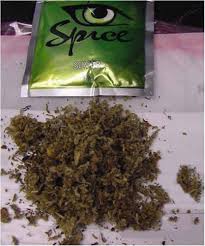
This guide explains the legal landscape around synthetic cannabinoid sprays — commonly known as K2 or Spice — in plain language. It covers federal law, state law, international comparisons, and the specific legal mechanisms that manufacturers use to remain in a gray area. It also addresses what “legal” actually means in this context, because the answer may surprise you: in the world of synthetic cannabinoids, legal has never equated to safe, and understanding the difference is a matter of genuine public health importance.
1. Overview: Why Synthetic Spray Legality Is So Complicated
Most people assume that drug legality is straightforward: a substance is either legal or it isn’t. The reality of synthetic cannabinoid law reveals how inadequate that assumption is. The legal status of K2 spray and similar products is not a single fact — it is a constantly shifting mosaic of federal law, state law, specific chemical identities, labeling conventions, and prosecutorial discretion that varies by jurisdiction, by compound, and sometimes by the month.
Several features of the synthetic cannabinoid market make it uniquely resistant to conventional drug regulation. First, there is the sheer chemical diversity of the category — over 700 distinct synthetic cannabinoid compounds have been identified by forensic laboratories, each with its own legal status in each jurisdiction. Second, there is the speed of chemical innovation — manufacturers can and do modify molecular structures faster than regulatory agencies can schedule the resulting compounds. Third, there is the deliberate ambiguity of product labeling — products are designed to appear to be legal consumer goods while communicating their true purpose through visual code.
The result is a legal environment where the same product might be: federally illegal under one provision of law, potentially legal under another provision, illegal in some states, legal in others, prosecutable based on intent to circumvent drug laws regardless of chemical specifics, and effectively unenforced in many jurisdictions due to resource constraints and evidentiary challenges. This complexity does not protect consumers — it exploits them.
700+Distinct synthetic cannabinoid compounds identified by forensic labs
43U.S. states with specific synthetic cannabinoid scheduling laws
2012Year the first major federal scheduling law for synthetic cannabinoids passed
2. U.S. Federal Law: The Controlled Substances Act and Scheduling
At the federal level in the United States, the primary legal instrument governing synthetic cannabinoids is the Controlled Substances Act (CSA), administered by the Drug Enforcement Administration (DEA). The CSA creates five schedules of controlled substances based on medical use, abuse potential, and safety. Schedule I — the most restrictive — is reserved for substances deemed to have no accepted medical use and high potential for abuse.
The Synthetic Drug Abuse Prevention Act of 2012
The first major federal legislative response to the synthetic cannabinoid market came with the Synthetic Drug Abuse Prevention Act of 2012, which placed 26 types of synthetic cannabinoids into Schedule I of the CSA. This was a significant step — before this legislation, most synthetic cannabinoids existed in a legal vacuum at the federal level — but it immediately revealed the limitations of compound-specific scheduling. Within months of the legislation’s passage, manufacturers had introduced new compounds not covered by the law.
The 2012 Act also permanently scheduled five specific synthetic cannabinoids that had been placed under temporary scheduling orders, and it added synthetic cathinones (bath salts) to Schedule I. The legislation represented Congress’s recognition that existing drug laws were not equipped to handle a market deliberately designed to stay ahead of them.
Temporary Scheduling Authority
The DEA has authority under the CSA to place substances into Schedule I on a temporary basis — initially for two years, with a possible one-year extension — while the formal scheduling process proceeds. This temporary scheduling authority has been used extensively for synthetic cannabinoids: when a new compound begins appearing in K2 products and causing adverse health events, the DEA can act relatively quickly to schedule it temporarily without waiting for the full administrative rulemaking process.
This temporary scheduling power has been used dozens of times for specific synthetic cannabinoid compounds since 2010. However, it remains reactive rather than proactive — the DEA responds to compounds that have already appeared in the market and caused documented harm, not to the next generation of compounds that manufacturers are already developing.
Currently Federally Scheduled Compounds
As of 2024, numerous specific synthetic cannabinoid compounds are permanently scheduled as Schedule I substances under federal law. These include JWH-018, JWH-073, JWH-200, CP-47,497, cannabicyclohexanol, and many others. The DEA regularly publishes updated lists of scheduled substances, but the list is always incomplete relative to the total universe of compounds in circulation — that is the fundamental structural problem with compound-specific scheduling.
Key Federal Point
Even for synthetic cannabinoid compounds not yet specifically scheduled, federal prosecution may still be possible under the Federal Analogue Act (covered in Section 3) or under general drug trafficking statutes if prosecutors can demonstrate the compound was intended for human consumption as a drug. The absence of scheduling does not mean the absence of legal risk.
3. The Federal Analogue Act: The Catch-All That Often Fails
Recognizing that compound-specific scheduling would always lag behind a market deliberately designed to generate new compounds, Congress included the Federal Analogue Act (FAA) in the Controlled Substances Act when it was amended in 1986. The FAA was designed as a catch-all provision: it makes it illegal to manufacture, distribute, or possess with intent to distribute any substance that is “substantially similar” in chemical structure or pharmacological effect to a Schedule I or Schedule II controlled substance — if it is intended for human consumption.
On paper, the FAA should address the core problem of synthetic cannabinoid legality: even if a new compound is not yet specifically scheduled, it should be illegal under the FAA if it is substantially similar to THC or another scheduled cannabinoid and is intended to be consumed as a drug.
In practice, the FAA has proven significantly harder to apply than its drafters anticipated. Courts have interpreted the “substantially similar” standard inconsistently, and the requirement to prove both chemical similarity and intent for human consumption creates evidentiary challenges that prosecutors and defense attorneys have navigated very differently across jurisdictions. Some federal cases built on FAA prosecutions have succeeded; others have failed on the question of what “substantially similar” means when the defendant argues the product is sold as incense, not as a drug.
The “Not for Human Consumption” Problem
The FAA contains a significant limitation: it only applies to substances intended for human consumption. This is the legal mechanism that “not for human consumption” labels on K2 products are designed to exploit. Manufacturers and distributors argue that the label demonstrates lack of intent for human consumption, potentially removing the product from FAA coverage even when the substance is chemically similar to a scheduled drug and everyone involved knows it is being used as a drug.
Courts have not been uniformly persuaded by this argument — many judges and juries have found that the “not for human consumption” label is a transparent legal fiction when the product is sold in a smoke shop alongside papers and pipes. But the argument has succeeded often enough to create uncertainty and to make FAA prosecutions more resource-intensive than simple possession or trafficking charges.
4. State-by-State Legal Landscape in the U.S.
In the absence of comprehensive federal scheduling of all synthetic cannabinoids, states have enacted their own laws — and the resulting patchwork is one of the most complex areas of drug law in the country. By 2024, the majority of U.S. states have enacted some form of synthetic cannabinoid scheduling or broader legislation targeting the category, but the approaches vary significantly.
Approaches States Have Taken
Compound-specific scheduling: Many states have added specific synthetic cannabinoid compounds to their state controlled substances schedules, mirroring the federal approach. This approach has the same limitation as the federal compound-specific model — it is always behind the market.
Class-based scheduling: A more sophisticated approach adopted by some states involves scheduling entire classes of chemical compounds based on their core structural features, rather than listing individual molecules. This approach is more durable against the manufacturer practice of slightly modifying structures to evade scheduling, because the modified compound still falls within the scheduled class. Several states, including Florida and Virginia, have adopted class-based approaches with varying degrees of comprehensiveness.
Analogue provisions: Some states have enacted their own analogue act provisions, extending their drug laws to cover substantially similar compounds to scheduled substances. State analogue acts have been applied more aggressively in some jurisdictions than the federal FAA.
Consumer protection and labeling laws: Some states have used consumer protection statutes, false advertising laws, or food safety regulations to target synthetic cannabinoid products, particularly those sold as “herbal incense” or “natural products.” These approaches sidestep the chemical scheduling issue by focusing on misleading marketing rather than specific compound identity.
| State Approach | Examples | Effectiveness | Limitation |
|---|---|---|---|
| Compound-Specific | Most states initially | Moderate — covers known compounds | Always behind new variants |
| Class-Based | Florida, Virginia, others | Higher — covers structural variants | Legal challenges on vagueness grounds |
| State Analogue Act | New York, Texas, others | Variable — depends on enforcement | “Substantially similar” still disputed |
| Consumer Protection | Several states | Moderate — targets marketing | Civil rather than criminal typically |
| Blanket Ban | Some states — all synthetic cannabinoids | High in theory | Enforcement resource-intensive |
Practical Note for Residents
The legal status of a specific K2 product in your state depends on which compounds it contains, which scheduling approach your state has adopted, and how recently your state’s controlled substances schedule was updated. Because both the products and the laws change frequently, the only reliable way to determine current legal status is to consult your state’s current controlled substances act and, if necessary, an attorney familiar with local drug law. Assuming legality based on retail availability is legally and physically dangerous.
5. Legislative Timeline: The Scheduling Arms Race
The history of synthetic cannabinoid legislation is the history of a persistent asymmetry: a commercial market that can innovate in days or weeks, and a regulatory system that requires months to years to respond. Understanding this timeline helps explain why the current legal patchwork looks the way it does.
2004 – 2008
Products Emerge, No Legal Framework Exists
First commercial synthetic cannabinoid products appear in Europe and reach the U.S. around 2008. Sold openly as “herbal incense.” No specific federal or state scheduling applies. Law enforcement has no legal basis for action against the products themselves.
2009 – 2010
First State Bans, DEA Temporary Scheduling Begins
Kansas becomes the first U.S. state to ban specific synthetic cannabinoids (2009). Several other states follow quickly. The DEA exercises its emergency scheduling authority for the first time to temporarily place five synthetic cannabinoids in Schedule I (2010). Manufacturers respond within weeks by introducing new, unscheduled compounds.
2012
Federal Synthetic Drug Abuse Prevention Act
Congress passes the Synthetic Drug Abuse Prevention Act, permanently scheduling 26 synthetic cannabinoids under Schedule I. Most comprehensive federal action to date. Manufacturers again respond with structural modifications, and a new generation of “third-wave” synthetic cannabinoids — more potent and more dangerous than predecessors — begins circulating.
2013 – 2016
Third-Wave Compounds and Mass Overdose Events
AB-CHMINACA, AB-PINACA, and related third-wave compounds enter the market. Emergency department visits surge. Mass overdose events — dozens of people simultaneously incapacitated in public spaces — are documented in multiple U.S. cities. DEA schedules individual compounds through emergency orders but cannot keep pace. Several states enact class-based scheduling in response.
2018
Brodifacoum Contamination Outbreak
Synthetic cannabinoid products contaminated with brodifacoum (rat poison) cause life-threatening bleeding disorders in 300+ people across multiple states. At least 8 deaths confirmed. Legislative response focuses on adulterant testing and broader scheduling authority. Public health emergency declarations issued in Illinois.
2019 – Present
Fourth-Generation Compounds, Vaping Integration
New generations of synthetic cannabinoid compounds continue emerging. Vaping format becomes increasingly dominant, complicating detection. Multiple states update scheduling laws. DEA continues temporary and permanent scheduling of individual compounds. The fundamental arms race dynamic remains unresolved.
6. International Legal Status: A Global Overview
The legal status of synthetic cannabinoids varies significantly across countries, reflecting different regulatory philosophies, legislative timeframes, and enforcement priorities. The international picture also illustrates what more comprehensive regulatory approaches look like — and what their limitations are.
Comprehensive Ban (Most Compounds)
UK, Australia, Japan, South Korea, much of the EU. All or most synthetic cannabinoids scheduled regardless of specific compound identity.
Compound-Specific Scheduling
United States, Canada, Germany (partially). Specific compounds scheduled as identified. Always lags behind new variants.
Legal Gray Area
Some countries in Eastern Europe, parts of Southeast Asia. Synthetic cannabinoids not specifically addressed, creating de facto gray markets.
Emerging Regulation
Several developing nations currently building legislative frameworks in response to documented public health harms.
United Kingdom: The Psychoactive Substances Act 2016
The United Kingdom’s approach represents one of the most ambitious attempts to resolve the scheduling arms race through a fundamentally different regulatory philosophy. Rather than scheduling specific compounds, the Psychoactive Substances Act 2016 made it an offense to produce, supply, offer to supply, possess with intent to supply, import, or export any psychoactive substance — broadly defined as any substance capable of affecting mental functioning or emotional state by stimulating or depressing the nervous system.
The Act contains exemptions for alcohol, tobacco, caffeine, food, and licensed medicinal products. Everything else that is psychoactive is effectively prohibited from commercial sale. This approach theoretically eliminates the arms race problem entirely: it does not matter what the new compound is called or how its structure was modified, if it is psychoactive and not specifically exempted, it is illegal to sell.
Implementation has been mixed. The Act successfully closed “head shops” selling synthetic cannabinoids almost immediately after passage. However, online sales and private importation remain significant enforcement challenges, and the underground market has adapted rather than disappeared. The broad definition of “psychoactive substance” also raised concerns about overbreadth — poppers (amyl nitrite), used primarily by gay men, were initially caught by the Act before being exempted following significant advocacy.
Australia and New Zealand
Australia has taken a comprehensive scheduling approach through its Therapeutic Goods Administration (TGA) and state drug laws, with most synthetic cannabinoids scheduled under Schedule 9 (prohibited substances) at the federal level. Several high-profile mass overdose events involving synthetic cannabinoids, including incidents involving homeless populations in Melbourne and Sydney, have reinforced political will for aggressive enforcement. New Zealand passed its Psychoactive Substances Act in 2013 with a novel approach — requiring pre-market safety testing for new psychoactive substances rather than reacting post-market — before effectively suspending the framework after public opposition to the concept of “approved” psychoactive substances.
European Union
The European Union addresses synthetic cannabinoids primarily through the European Monitoring Centre for Drugs and Drug Addiction (EMCDDA) and through individual member state legislation. The EU Early Warning System monitors new psychoactive substances and supports rapid scheduling at the member state level when new compounds are identified. However, as the EU does not have direct authority over member states’ drug laws, the response has been uneven — some member states (particularly in Eastern Europe) have been slower to enact comprehensive synthetic cannabinoid legislation.
Japan and South Korea
Both Japan and South Korea have enacted comprehensive legislation targeting synthetic cannabinoids, partly in response to significant domestic public health crises. Japan’s Pharmaceutical and Medical Device Act was amended to include designation procedures for “designated substances” — a class that includes many synthetic cannabinoids — that can be scheduled quickly based on pharmacological assessment rather than clinical harm data. South Korea similarly moved toward class-based scheduling following domestic overdose events. Both countries are noted for aggressive enforcement relative to other jurisdictions.
7. The Legal Gaps Manufacturers Exploit
Understanding how synthetic cannabinoid manufacturers maintain legal cover requires understanding the specific strategies they use — strategies that have proven remarkably durable across two decades of escalating regulatory response.
The Structural Modification Strategy
The most fundamental strategy is chemical: modify the molecular structure of a scheduled compound sufficiently to fall outside existing scheduling definitions while retaining pharmacological activity at cannabinoid receptors. This requires access to a chemist familiar with synthetic cannabinoid pharmacology and an understanding of what structural features existing scheduling laws cover. Because academic papers describing synthetic cannabinoid structures and pharmacology are publicly available, this information is accessible to anyone with the scientific literacy to use it.
The modifications required to evade compound-specific scheduling are often minimal — a single changed functional group, an altered carbon chain length, a different halogen substitution. The resulting compound may be pharmacologically very similar or even more potent than the scheduled compound it was derived from, but it is legally distinct under compound-specific scheduling frameworks.
The Labeling Strategy
The “not for human consumption” label is the most visible element of the legal evasion toolkit. It is designed to complicate prosecution under the Federal Analogue Act’s intent-for-human-consumption requirement and to create a paper trail suggesting the product is something other than a drug. This labeling strategy has been supplemented by “herbal incense,” “potpourri,” and “plant food” designations — all intended to frame the product as a non-drug consumer good.
Courts have increasingly seen through this fiction, particularly in cases where products are sold alongside smoking paraphernalia, where the packaging contains imagery clearly associated with drug use, or where marketing materials directly reference psychoactive effects. However, the labeling strategy continues to provide some legal friction that makes straightforward prosecution more difficult.
The Distribution Diversification Strategy
Manufacturers and distributors have adapted to enforcement by diversifying distribution channels and supply chains in ways that make prosecution more complex. Products manufactured overseas and imported under the guise of legitimate goods, distributed through layers of intermediaries, and sold at retail by operators who claim not to know the true nature of the product create chains of deniability that are resource-intensive for prosecutors to dismantle.
Consumer Warning
The legal strategies used by synthetic cannabinoid manufacturers are designed to protect manufacturers and distributors from prosecution — not to protect consumers from harm. A product that is technically legal because its specific compound has not yet been scheduled is not safer than a scheduled compound. The legal gap is a commercial tool, not a safety certification.
8. How Law Enforcement Actually Prosecutes K2 Cases
Understanding the legal landscape requires understanding how drug laws are actually enforced, which often diverges significantly from how they are written. K2 enforcement is highly uneven across jurisdictions, shaped by prosecutorial priorities, laboratory capabilities, and resource constraints.
The Laboratory Challenge
Successful prosecution of K2 cases typically requires laboratory identification of the specific compound present in the product. Standard drug testing equipment used by many law enforcement agencies was designed to identify common controlled substances — heroin, cocaine, THC — and may not reliably identify synthetic cannabinoids, particularly newer compounds. Forensic laboratories capable of identifying novel synthetic cannabinoids through techniques such as gas chromatography-mass spectrometry (GC-MS) exist but are not universally available, and testing is time-consuming and expensive.
This creates a practical problem: a prosecutor may have a product that is clearly a synthetic cannabinoid drug being sold and used as such, but without laboratory confirmation of a specific scheduled compound, bringing charges is difficult. In some jurisdictions, this has led to charges being dropped or plea agreements that result in minimal consequences for distributors.
Federal vs. State Prosecution
The choice between federal and state prosecution significantly affects outcomes. Federal charges under the CSA, FAA, or drug trafficking statutes carry substantially heavier penalties than most state drug charges. Federal resources — including FBI and DEA investigative capacity and federal prosecutor expertise — are generally more substantial than state resources for complex multi-jurisdictional synthetic cannabinoid cases. However, federal prosecution is typically reserved for larger-scale distribution operations rather than individual possession or small retail sale cases, which are more commonly handled at the state level.
Intent-Based Prosecution
When specific compound identification is not possible or the compound is not yet scheduled, prosecutors sometimes pursue intent-based theories — arguing that regardless of the specific compound, the defendant was in the business of selling a psychoactive drug and knew it. These theories have had mixed success and often require extensive evidence of marketing, sales patterns, and buyer behavior to establish knowing intent.
9. Legal Consequences: Possession, Sale, and Manufacture
For individuals involved with K2 spray products — whether as users, sellers, or manufacturers — the legal consequences depend heavily on jurisdiction, specific compound, quantity, and role. Here is a general framework for understanding the range of potential consequences.
Simple Possession
For users found in possession of K2 products containing scheduled compounds, state law typically governs. Many states treat simple possession of scheduled synthetic cannabinoids as a misdemeanor on first offense, with felony charges possible for repeat offenses or larger quantities. Some states have decriminalized small quantities of certain synthetic cannabinoids, particularly as part of broader drug decriminalization efforts, though this is less common than for natural cannabis. Federal simple possession charges are rarely pursued except in specific contexts (federal property, federal jurisdiction).
Distribution and Sale
Selling K2 products is treated far more seriously than possession. Retail sale of products containing scheduled synthetic cannabinoids can result in felony charges in most jurisdictions, with penalties escalating based on quantity, proximity to schools or parks, and prior criminal history. The “not for human consumption” label provides no reliable legal protection for sellers — courts have consistently found that sellers who know their products are being purchased for drug use cannot claim the label as a defense.
Manufacturing and Large-Scale Trafficking
Manufacturing synthetic cannabinoid compounds or importing them in large quantities for distribution is a serious federal crime carrying substantial prison sentences. Federal trafficking charges for large-scale synthetic cannabinoid operations have resulted in sentences of 10 years or more. International trafficking cases — particularly involving products manufactured in China or Eastern Europe and imported into the U.S. — have been prosecuted under international drug trafficking statutes with even heavier potential penalties.
Important Note
Legal consequences described here represent general ranges based on existing law as of 2024. Specific consequences in any individual case depend on the facts, jurisdiction, applicable statutes, prosecutorial discretion, and many other factors. This guide does not constitute legal advice. Anyone facing charges related to synthetic cannabinoids should consult a qualified criminal defense attorney in their jurisdiction.
10. The “Not for Human Consumption” Label and the Law
No element of K2 spray’s legal history has generated more litigation, academic commentary, or public confusion than the “not for human consumption” label. It appears on virtually every K2 product ever sold commercially. It is both legally significant and legally insufficient — a label that creates genuine legal complexity while fooling almost nobody about the true purpose of the product.
Why the Label Exists
The label’s purpose is to attempt to remove the product from coverage under the Federal Analogue Act, which applies only to substances intended for human consumption. It also attempts to create a defense against consumer protection claims, food safety regulations, and some state drug laws that include intent elements. From a pure legal strategy perspective, it is a rational response to the specific language of applicable statutes.
Courts’ Response to the Label
Courts across the country have examined the “not for human consumption” label in the context of K2 prosecutions and have reached varying conclusions. The most consistent thread in case law is that context matters enormously. When a product labeled “not for human consumption” is sold in a smoke shop alongside cannabis papers, pipes, and related paraphernalia, priced in single-use quantities, and purchased repeatedly by customers who come in asking for “the good stuff” or “what gets you highest,” the label loses its persuasive force as evidence of non-drug intent. Judges and juries are permitted to consider the totality of circumstances, and the totality of circumstances around K2 retail sales has generally supported drug-related charges despite the label.
However, the label has succeeded in complicating prosecutions enough that many cases result in plea agreements rather than convictions at trial, and some cases involving technically unscheduled compounds have failed to result in any conviction. This inconsistency is a product of legislative architecture that was designed for a simpler era of drug enforcement.
11. Legal Reform: What Advocates and Policymakers Are Proposing
The persistent inadequacy of compound-specific scheduling has generated significant discussion among lawmakers, public health advocates, drug policy researchers, and legal scholars about what a more effective regulatory approach would look like. Several models have been proposed and, in some cases, partially implemented.
Class-Based Scheduling Expansion
Building on the approach adopted by several states, expanding class-based scheduling at the federal level would allow laws to cover structural variants of scheduled compounds without requiring individual compound identification. The legal challenge for class-based scheduling is constitutional — laws that are too broadly written may be challenged as unconstitutionally vague, since individuals and businesses must be able to know what conduct is prohibited. Drafting class-based scheduling provisions narrowly enough to survive constitutional challenge while broadly enough to capture structural variants is technically demanding but achievable, as demonstrated by jurisdictions that have done it successfully.
The UK Model: Activity-Based Prohibition
Adopting a framework similar to the UK’s Psychoactive Substances Act — prohibiting commercial sale of psychoactive substances broadly rather than scheduling specific compounds — would theoretically eliminate the arms race entirely. The political and constitutional barriers to such an approach in the United States are substantial. The First Amendment protects certain uses of substances, the Due Process clause requires adequate notice of prohibited conduct, and the practical difficulties of defining “psychoactive substance” in a way that does not criminalize alcohol, caffeine, and countless other legal substances would require extremely careful legislative drafting.
Public Health Framing and Harm Reduction
An increasing number of drug policy researchers argue that the legality question has been overemphasized relative to harm reduction. The evidence from decades of drug prohibition is that criminalization is more effective at punishing users than at reducing use or harm. Proposals in this vein focus on expanding substance testing services so users can identify what they are consuming, treating overdoses as medical rather than criminal events, investing in treatment infrastructure rather than enforcement infrastructure, and educating young people with accurate information rather than prohibition-era messaging that has proven ineffective.
12. The Bottom Line: Legal Status vs. Safety
After traversing the full complexity of synthetic spray legality — federal scheduling, state variations, international comparisons, prosecutorial practice, and reform debates — it is essential to return to the foundational point that this entire legal architecture was designed to obscure: legal status and safety are completely independent variables when it comes to K2 spray.
A synthetic cannabinoid compound that has not yet been scheduled by the DEA or by a given state is not safe. It has not been reviewed for safety. It has not been tested in humans. It has no established safe dose. The absence of scheduling reflects regulatory lag, not safety evidence. The “legal” status of some K2 products in some jurisdictions at some points in time has contributed directly to the deaths and hospitalizations of people who made the reasonable but catastrophically wrong assumption that legal equals safe.
The legal complexity around synthetic cannabinoids serves one primary beneficiary: the manufacturers and distributors who profit from it. It does not serve consumers, who lack the legal and chemical expertise to navigate it. It does not serve communities, who bear the public health and public safety costs of the market it enables. And it does not serve the law itself, which loses credibility when its application is this inconsistent and this easily manipulated.
The most important legal fact about K2 spray is not which specific compounds are currently scheduled in which jurisdiction. It is that every government health agency in every country that has studied the evidence has concluded that synthetic cannabinoids pose serious risks of severe harm and death — and that no regulatory gray area changes that underlying reality.