
The name “synthetic marijuana” is perhaps the most misleading name in the modern drug landscape. It implies a relationship with cannabis — a synthetic version of something familiar, perhaps stronger but fundamentally similar. The reality is a completely different class of compounds with a completely different mechanism of action, a completely different risk profile, and a documented capacity to cause cardiac arrest, acute psychosis, kidney failure, and death in ways that natural cannabis has never produced.
If you are reading this because you or someone you know has encountered synthetic marijuana — whether by choice or by accident, whether you are a parent, educator, healthcare provider, or someone seeking honest information — this guide is for you. It provides complete, accurate, science-based information without judgment and without minimization of the genuine risks these products carry.
1. What Synthetic Marijuana Actually Is
Synthetic marijuana is the common name for products containing synthetic cannabinoids — human-made chemical compounds designed to activate the same receptors in the brain that THC, the primary psychoactive compound in natural cannabis, targets. The name “synthetic marijuana” is widely used but fundamentally inaccurate, and that inaccuracy contributes directly to people underestimating the risk.
Real marijuana comes from the Cannabis sativa plant and contains THC along with hundreds of other naturally occurring compounds that have been studied for decades. Synthetic marijuana contains none of these. It contains laboratory-created molecules that happen to target the same receptor — the CB1 receptor — but do so in a fundamentally different and far more dangerous way.
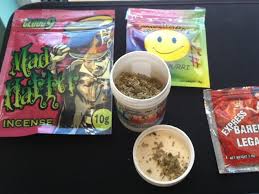
These synthetic compounds are dissolved in chemical solvents and sprayed onto dried plant material — typically dried herbs or botanicals — which is then sold as “herbal incense,” “potpourri,” or “herbal smoking blend.” The plant material itself is pharmacologically inert. It is simply a vehicle for delivering the synthetic chemical into the lungs when smoked. The “herbal” and “natural” language in product names and marketing has no relationship to what the active ingredient actually is.
Why the Name Matters — and Why It’s Dangerous
The term “synthetic marijuana” has stuck in popular usage because it is memorable and communicates that these products are used for their intoxicating effects. But it carries a dangerous implication: that these products are essentially cannabis, just made in a lab rather than grown in a field. This implication is false and has contributed to serious harm. People who would calibrate their expectations and caution based on cannabis experience are blindsided by the dramatically different and more severe effects of synthetic cannabinoids.
More accurate names include synthetic cannabinoids, novel psychoactive substances (NPS), or the specific product brands K2 or Spice. This guide uses “synthetic marijuana” because it is the term most people search for — but it consistently clarifies that synthetic marijuana is not marijuana and should not be understood as such.
700+Distinct synthetic cannabinoid compounds identified in products worldwide
800×More potent than THC — some synthetic cannabinoid compounds
0Approved antidotes for synthetic marijuana overdose exist anywhere
2. Street Names, Brand Names and Forms
Synthetic marijuana circulates under an enormous number of brand names and street terms, deliberately varied and constantly updated to stay ahead of regulatory bans and public recognition. Understanding this landscape helps with identification and awareness.
Most Common Names
K2 — One of the first and most widely recognized brand names in the U.S. market, introduced around 2008. The name references the world’s second-highest mountain, suggesting power and potency. Now used generically to refer to synthetic cannabinoid products broadly.
Spice — The dominant brand name in the UK and European markets. Also now used generically. Associated with some of the most significant mass overdose events documented in the UK, particularly in homeless populations.
Black Mamba — A widely circulated brand particularly associated with severe adverse events in the UK. Named for the highly venomous snake.
Mojo, Scooby Snax, Joker, AK-47, Kush, Kronic, Cloud 9, Bliss, Smacked — Among hundreds of other brand names that have circulated in different markets and time periods. New brand names emerge constantly, particularly after law enforcement actions against specific products.
Forms of Synthetic Marijuana
Herbal smoking blends: The original and most common form. Dried plant material in foil envelopes, smoked like cannabis. Available in convenience stores, gas stations, and head shops in many areas.
Vaping liquids: Synthetic cannabinoid compounds dissolved in propylene glycol for use in e-cigarettes. Rapidly growing format. Visually indistinguishable from legitimate vaping products. Associated with some of the most severe adverse events documented.
Edibles and infused products: Less common but documented. Synthetic cannabinoids incorporated into food products, capsules, or other consumable formats. The edible format creates additional dose unpredictability due to variable absorption rates.
Pure powder or crystal: The raw synthetic cannabinoid compound itself, sometimes sold to people who produce their own spray products. Extremely dangerous due to high potency in small quantities and risk of accidental exposure through skin contact or inhalation.
3. Where It Came From: The Origin Story
Synthetic marijuana did not emerge from the criminal drug world. It emerged from legitimate academic pharmacology — a fact that is both ironic and instructive about the unintended consequences of open scientific publication.
1970s – 1990s
University Labs Create the Compounds
Researchers at Clemson, Northeastern, and other universities synthesize potent cannabinoid-receptor-binding compounds as neuroscience research tools. These are published in peer-reviewed journals with complete chemical structures — never intended for human use. Dr. John Huffman, creator of the JWH series, later described the compounds as “too dangerous for human consumption.”
2002 – 2006
Illicit Manufacturers Read the Papers
Clandestine chemists — primarily in China and Eastern Europe — access published academic research and begin synthesizing research compounds for commercial sale. The spray application process is developed to create commercially scalable products. First products appear in European markets.
2008 – 2010
U.S. Market Erupts
K2 and Spice products reach American stores. Marketed as “legal” cannabis alternatives. Emergency rooms begin seeing unprecedented presentations. Poison control centers log hundreds of calls. Public health agencies begin tracking a new threat without existing protocols to address it.
2012 – Present
The Arms Race Begins in Earnest
Federal Synthetic Drug Abuse Prevention Act schedules 26 compounds. Manufacturers respond within months with new variants. Each new compound generation is often more potent and less well-characterized than its predecessors. Mass overdose events occur globally. The regulatory gap remains structurally unresolved despite decades of legislative effort.
4. The Science: How Synthetic Marijuana Works in the Brain
The pharmacological difference between synthetic marijuana and natural cannabis is the single most important fact for understanding why synthetic marijuana is so dangerous. It is not a matter of degree — it is a fundamental difference in mechanism.
The Endocannabinoid System
Both natural cannabis and synthetic marijuana target the brain’s endocannabinoid system (ECS) — a network of receptors that regulates mood, memory, pain, appetite, sleep, stress response, immune function, and motor coordination. The primary receptor is CB1, found densely throughout the brain particularly in regions governing emotion, memory, and decision-making.
The body produces its own cannabinoid-like molecules — endocannabinoids such as anandamide — that bind to CB1 receptors transiently and are then broken down by enzymes. This is a self-regulating system: it activates when needed and shuts off when not needed. Natural cannabis introduces THC, which partially mimics endocannabinoids and produces intoxication while the system retains some regulatory capacity.
Full Agonism: The Critical Difference
THC is a partial agonist at CB1 receptors. It activates them to perhaps 40-60% of their maximum possible activity — like pressing an accelerator partway. Synthetic cannabinoids are full agonists. They activate CB1 receptors to their absolute maximum — pressing the accelerator to the floor — with no natural ceiling mechanism to limit the effect.
The brain is not designed to handle maximum CB1 stimulation. Every system the ECS regulates — mood, memory, heart rate, blood pressure, pain, muscle control, nausea, seizure threshold — is simultaneously disrupted to the maximum degree the receptor can produce. There is no internal buffer. There is no natural ceiling. The result is effects that can be dramatically more severe than any amount of natural cannabis could produce.
Additionally, many synthetic cannabinoid compounds bind to CB1 receptors with binding affinities ranging from 10 to 800 times greater than THC — meaning they attach more tightly, last longer, and produce more intense effects per unit of compound.
5. Synthetic Marijuana vs. Real Cannabis: Key Differences
The comparison between synthetic marijuana and natural cannabis is one of the most important and most frequently misunderstood topics in drug education. Here is a direct, evidence-based comparison across the dimensions that matter most for safety and risk assessment.
| Property | Natural Cannabis | Synthetic Marijuana |
|---|---|---|
| Active compound origin | Natural plant compound (THC) | Human-made synthetic chemical |
| Receptor mechanism | Partial agonist — natural ceiling | Full agonist — no ceiling, maximum activation |
| Potency vs. THC | Baseline reference | 10× to 800× more potent per compound |
| Dose consistency | Reasonably predictable within strains | Extremely variable — hotspot distribution |
| Compound identity | Known, studied for decades | Unknown without lab testing; changes between batches |
| Cardiac risk | Mild transient heart rate increase | Cardiac arrest, heart attack — documented in healthy young users |
| Psychosis risk | Low-moderate in vulnerable individuals | High — documented in first-time users with no psychiatric history |
| Kidney damage | Minimal | Acute kidney injury documented — some cases permanent |
| Bleeding risk | None | Life-threatening bleeding documented from contaminated batches |
| Confirmed overdose deaths | None confirmed from THC alone | Multiple confirmed deaths directly attributed |
| Antidote available | Not required for most cases | None exists anywhere in the world |
| Detectable on drug tests | Yes — standard panels detect THC metabolites | No — standard panels do not detect synthetic cannabinoids |
| Physical dependence | Moderate — cannabis withdrawal syndrome | High — withdrawal compared to opioid withdrawal in severity |
Critical Safety Point
Prior experience with natural cannabis provides essentially no protection when using synthetic marijuana. The pharmacological differences are so significant that what feels like a manageable dose based on cannabis experience may be dramatically insufficient calibration for synthetic cannabinoids. Many emergency room presentations involve people who misjudged their tolerance based on cannabis experience.
6. What Synthetic Marijuana Does to the Body
The physical health consequences of synthetic marijuana exposure are extensive and can affect multiple organ systems simultaneously. The endocannabinoid system’s widespread distribution through the body means harm is rarely confined to a single area.
Heart & Cardiovascular
Severe tachycardia, dangerous blood pressure elevation, ventricular arrhythmias, myocardial infarction in young healthy individuals, and cardiac arrest — all documented. Cardiovascular complications are among the most acutely life-threatening and have caused confirmed deaths in users with no prior cardiac history.
Kidneys
Acute kidney injury requiring dialysis documented in cluster events linked to specific batches. Multiple users developing simultaneous kidney failure from the same product. Some cases have resulted in permanent kidney damage. Mechanism involves probable direct toxic effects on kidney tissue.
Brain & Nervous System
Seizures, acute psychosis, severe agitation, altered consciousness, coma, and stroke all documented. Long-term neuroimaging studies show structural brain changes in heavy users including hippocampal volume reduction and white matter abnormalities corresponding to measurable cognitive deficits.
Lungs
Direct pulmonary damage from combustion products, respiratory depression in severe overdose creating aspiration risk. Vaping-format synthetic marijuana associated with acute lung injury similar to EVALI syndrome documented in the 2019-2020 vaping crisis.
Blood Clotting
In the 2018 brodifacoum contamination outbreak, synthetic marijuana products laced with rat poison anticoagulant caused life-threatening bleeding disorders in 300+ people across multiple U.S. states, killing at least 8. This remains one of the most dramatic documented drug contamination events in U.S. history.
Muscles
Rhabdomyolysis — severe muscle tissue breakdown releasing toxic proteins into the bloodstream — documented in overdose cases. This compounds kidney injury risk significantly and requires urgent medical management to prevent permanent organ damage.
7. Mental Health and Brain Effects
The neurological and psychiatric consequences of synthetic marijuana are among its most serious and most underappreciated dangers. They range from acute psychiatric emergencies to lasting structural brain damage — and can occur even in people with no prior psychiatric history after a single use.
Acute Psychosis
Full agonism at CB1 receptors throughout the prefrontal cortex, hippocampus, and amygdala can produce complete psychotic breaks — hallucinations, paranoid delusions, and disorganized thinking indistinguishable in the acute phase from schizophrenia. Emergency physicians across the country have documented cases of first-time synthetic marijuana users presenting in full psychosis with no prior mental health history. This is categorically different from natural cannabis, where psychosis is associated with heavy long-term use in genetically predisposed individuals.
Anxiety and Panic
Severe anxiety and panic attacks are among the most commonly reported effects of synthetic marijuana, even at doses that do not trigger full psychosis. The intensity of these panic experiences — often described as a certainty of dying combined with complete inability to self-regulate — can leave lasting psychological marks including post-traumatic symptoms and ongoing anxiety disorders.
Long-Term Cognitive Effects
Regular use of synthetic marijuana has been associated with persistent memory impairment, reduced processing speed, impaired attention and executive function, and emotional blunting. Neuroimaging studies have documented structural changes — hippocampal volume reduction and white matter tract damage — that correspond to these functional deficits and appear to persist for months to years after cessation of use.
Dependence and Withdrawal
Synthetic marijuana produces physical dependence. When regular use stops, a withdrawal syndrome emerges that includes severe anxiety, sweating, nausea, vomiting, muscle cramps, tremors, palpitations, insomnia, and intense cravings. The severity has been compared by clinicians to opioid withdrawal — a comparison that underscores how far these compounds are from the “harmless” perception their marketing cultivates.
“Calling these products ‘synthetic marijuana’ is like calling a loaded gun a ‘synthetic toy.’ The name suggests familiarity and safety. The reality is neither.”Toxicologist, American Journal of Emergency Medicine, 2022
8. Symptoms: Mild to Life-Threatening
Synthetic marijuana intoxication produces a wide range of symptoms that vary with dose, specific compound, individual neurobiology, and prior exposure. The most critical safety fact about this symptom spectrum is the absence of a reliable plateau — mild initial symptoms provide no guarantee that severe effects will not follow.
Mild to Moderate
- Elevated mood, euphoria
- Relaxation and sedation
- Altered time perception
- Increased appetite
- Red eyes, dry mouth
- Mild heart rate increase
- Impaired coordination
- Mild anxiety or paranoia
- Nausea
- Difficulty concentrating
Severe / Emergency
- Acute psychosis, hallucinations
- Extreme agitation or violence
- Seizures and convulsions
- Unresponsiveness or coma
- Chest pain or cardiac arrest
- Severely elevated blood pressure
- Vomiting with aspiration risk
- Acute kidney failure
- Stroke
- Death
Emergency: Call 911 Immediately If
Someone loses consciousness or cannot be roused. Seizure or convulsive movements occur. There is chest pain, pressure, or a racing heart. Breathing is labored, very shallow, or has stopped. Vomiting occurs in someone not fully conscious. Extreme agitation poses danger to themselves or others. Face drooping, arm weakness, or slurred speech appears. Unexplained bleeding occurs anywhere on the body. Do not wait. There is no antidote — rapid emergency medical response is the only reliable intervention.
9. Common Myths About Synthetic Marijuana — Debunked
Myth
“It’s just like marijuana but legal.”
Synthetic marijuana shares only the receptor target with natural cannabis. Its mechanism — full agonism — its potency (up to 800× THC), its risk profile, and its clinical presentation in adverse events are all fundamentally different. It is not a safer or legal version of cannabis. It is a different class of compound with a different and more dangerous pharmacology.
Myth
“It’s natural — it’s made from herbs.”
The herbs are irrelevant. The active ingredient is a synthetic chemical compound with no relationship to any plant. The plant material is simply a vehicle for delivering the drug into the lungs. “Herbal” describes only the packaging fiction, not the active ingredient.
Myth
“I’ve used it before without problems, so I know my dose.”
Prior use provides essentially no reliable information about future dose safety. The compound changes between batches. Hotspot distribution means dose varies within the same package. Calibration from prior use is dangerously unreliable and has contributed to many overdose events.
Myth
“It won’t show on a drug test, so there’s no risk.”
Evading a drug test does not evade the cardiac event, the psychosis, the kidney failure, or the death. Standard panels don’t detect it — but the drug is still present and still causing harm. Specialized forensic testing can detect synthetic cannabinoids when specifically ordered.
Myth
“Only people who are already sick get seriously hurt.”
Cardiac arrests, acute psychosis, and kidney failure from synthetic marijuana have been documented in young, healthy, first-time users with no prior medical or psychiatric history. There is no baseline health status that makes synthetic marijuana safe.
10. Who Uses Synthetic Marijuana and Why
Understanding who encounters synthetic marijuana and the reasons behind use is essential for effective prevention, harm reduction, and support. Use is not evenly distributed — specific populations are disproportionately affected for reasons rooted in social, economic, and institutional realities.
Young People
Adolescents and young adults are among the most heavily marketed-to populations. Youth-oriented packaging and branding, the perception of legality and naturalness, lower price points than cannabis, and the ability to evade standard drug testing all contribute to disproportionate use among young people. The developing brain is neurologically more vulnerable to lasting harm from cannabinoid system disruption than the mature adult brain.
People Seeking to Evade Drug Testing
A substantial proportion of synthetic marijuana use is driven by the desire to avoid detection on standard urine drug screens. People on probation, in drug-tested employment, military personnel, and student athletes turn to synthetic marijuana specifically because it does not appear on standard panels. This is one of the most tragic ironies in the drug landscape — avoiding a cannabis drug test by substituting a compound that is dramatically more dangerous.
People Experiencing Homelessness
Synthetic marijuana is disproportionately prevalent among unhoused populations globally. Cost is the primary driver. The substance also serves as self-medication for the chronic pain, fear, trauma, and stress of street homelessness — a role that cannot be addressed through drug education or enforcement alone.
People in Correctional Settings
Synthetic marijuana has become prevalent in prison and jail populations because it evades drug testing. Mass overdose events in correctional facilities have been documented in multiple countries. Introduction of synthetic cannabinoid solutions onto paper or fabric that passes through mail screening has been documented in multiple prison systems.
11. How to Recognize Synthetic Marijuana Products
Synthetic marijuana products are deliberately designed to resist easy identification. However, several consistent markers assist with recognition across the product landscape.
Packaging: Foil envelopes that prevent smell detection; bright, cartoon-heavy, or youth-oriented graphic design; names referencing power, energy, or relaxation; “not for human consumption” disclaimers alongside clearly drug-oriented marketing; single-use pricing and quantities.
Common brand names to recognize: K2, Spice, Black Mamba,pulsewebhorizon.com, Scooby Snax, Joker, AK-47, Kush, Kronic, Cloud 9, Bliss, Smacked, Wicked X, Bizarro, and hundreds of regional variants that change continuously.
What does not reliably identify these products: Smell alone (added fragrance masks the chemical smell in many products); visual inspection of the plant material; standard drug test results (will not detect synthetic cannabinoids); prior familiarity with a product’s effects under the same brand name (compound formulations change without notice).
For Healthcare Providers
Patients presenting with unexplained agitation, psychosis, seizure, cardiac events, or altered consciousness in a context suggesting drug use should be evaluated for synthetic cannabinoid exposure even when standard drug screens return negative. Specialized testing using GC-MS or LC-MS can detect specific synthetic cannabinoid metabolites when specifically ordered. The clinical presentation — particularly severity and constellation of symptoms — is often the most reliable indicator when laboratory confirmation is not immediately available.
12. Emergency Response Guide
Synthetic marijuana overdose is a medical emergency with no specific antidote. Treatment is entirely supportive — managing symptoms as they emerge while the compound metabolizes. The speed of professional medical response is the primary factor determining outcome in serious cases.
Step 1 — Call 911 immediately if any severe symptoms from the list in Section 8 are present. Do not wait to see if symptoms improve on their own.
Step 2 — Stay with the person. Never leave someone experiencing a serious synthetic marijuana adverse event alone. If unconscious but breathing, place on their side in the recovery position to prevent aspiration.
Step 3 — Do not restrain physically unless the person is in immediate danger of harming themselves. Physical restraint of a person in stimulant-induced agitation can worsen cardiac stress significantly.
Step 4 — Communicate with responders. Tell emergency personnel what product was used if known. Standard drug screens will not detect synthetic cannabinoids — any product information helps with clinical management.
Step 5 — Know Good Samaritan protections. Most U.S. states have laws providing some protection from prosecution for people who call 911 for a drug-related overdose. Fear of legal consequences should never prevent someone from seeking emergency help.
13. Legal Status Explained
The legal status of synthetic marijuana is complicated, constantly changing, and widely misunderstood — in part because manufacturers deliberately exploit legal ambiguity as a commercial strategy.
At the federal level, many specific synthetic cannabinoid compounds are scheduled as Schedule I controlled substances under the Controlled Substances Act. The DEA has used emergency scheduling authority dozens of times to add specific compounds as they are identified in the market. The Federal Analogue Act potentially covers structurally similar compounds even before specific scheduling.
At the state level, 43 states have enacted specific synthetic cannabinoid scheduling laws, ranging from compound-specific to class-based approaches. Products sold openly in retail settings may contain compounds not yet specifically scheduled in that jurisdiction — not because they are safe, but because regulatory scheduling lags behind chemical innovation.
Internationally, comprehensive bans exist in the UK (Psychoactive Substances Act 2016), Australia, Japan, South Korea, and many EU member states. The UK’s approach — prohibiting all psychoactive substances from commercial sale rather than scheduling individual compounds — has proven more effective at closing retail markets than compound-specific scheduling.
Legal ≠ Safe
The most important legal fact about synthetic marijuana is not which compounds are currently scheduled in your jurisdiction. It is that legal status has no relationship to safety. Products that are technically legal because their specific compound is not yet on a controlled substances schedule may be the most potent and least well-characterized products in the market. “Sold legally” is a reflection of regulatory lag, not safety evidence.
14. Frequently Asked Questions
Is synthetic marijuana actually marijuana?
No. Despite the name, synthetic marijuana has no botanical relationship to the Cannabis sativa plant. It contains human-made chemical compounds — synthetic cannabinoids — that target the same brain receptors as THC but do so through a completely different mechanism (full agonism vs. partial agonism) at potencies ranging from 10 to 800 times greater than THC. The “marijuana” in the name refers only to the intended effect — intoxication — not to any chemical relationship with the cannabis plant.
Why is synthetic marijuana more dangerous than real cannabis?
Three key reasons. First, synthetic cannabinoids are full agonists at CB1 receptors — they activate them to maximum capacity with no natural ceiling, unlike THC which activates them partially. Second, many synthetic cannabinoids bind to these receptors 10 to 800 times more tightly than THC, meaning far smaller amounts produce far more intense effects. Third, the dose in any given product is unknown and inconsistent due to uneven spray distribution and continuously changing compound formulations, making it impossible to calibrate safely.
What does synthetic marijuana feel like?
At lower doses, synthetic marijuana may produce effects superficially similar to cannabis — euphoria, relaxation, altered perception. But the dose-response curve is steep and unpredictable. At higher doses or from hotspot portions of a product, effects can rapidly escalate to severe anxiety, paranoia, hallucinations, acute psychosis, seizures, and cardiovascular crisis. Many people who experience serious adverse events describe the transition from manageable intoxication to terror or unconsciousness as shockingly rapid and completely unexpected.
Can you overdose on synthetic marijuana?
Yes. Unlike natural cannabis — for which no human lethal overdose from THC alone has been confirmed — synthetic marijuana has been directly linked to overdose deaths. The combination of extreme potency, full receptor agonism, unknown dosing, and hotspot distribution creates genuine overdose risk at doses that are impossible to predict reliably. Life-threatening overdose presentations including cardiac arrest, respiratory depression, status epilepticus, and acute organ failure have all been documented.
How long does synthetic marijuana stay in your system?
This varies significantly between specific compounds. Some synthetic cannabinoid metabolites are eliminated within 24-48 hours; others persist longer. Standard drug screens will not detect them regardless of timing — specialized forensic laboratory testing is required, and even then, tests must be designed to detect the specific compounds of interest, of which there are more than 700. Detection windows in hair follicle testing can extend to 90 days for some compounds.
Is synthetic marijuana addictive?
Yes. Physical dependence develops with regular use, producing a withdrawal syndrome when use stops. Withdrawal symptoms include severe anxiety, sweating, nausea, vomiting, muscle cramps, tremors, heart palpitations, and intense cravings. The severity of this withdrawal syndrome — which some clinicians compare to opioid withdrawal — is a primary driver of continued use in dependent individuals who may want to stop but find the physical consequences of stopping unbearable without medical support.
What should I do if a family member is using synthetic marijuana?
Start with a conversation grounded in genuine concern rather than judgment. Share accurate information about the specific risks — particularly the differences from cannabis that the person may not be aware of. Offer concrete support toward professional help rather than ultimatums. Contact SAMHSA’s National Helpline at 1-800-662-4357 for guidance on treatment options and how to support someone toward care. If the person is in immediate danger from intoxication or overdose, call 911 immediately. Your own wellbeing also matters — Nar-Anon (nar-anon.org) provides free peer support for families of people with substance use disorders.
Can synthetic marijuana cause permanent damage?
Yes, in documented ways. Acute kidney injury from synthetic marijuana exposure has resulted in permanent kidney damage requiring ongoing dialysis in some patients. Neuroimaging studies have documented structural brain changes that persist for months to years after cessation. Severe cardiac events can produce lasting cardiac damage. The 2018 brodifacoum contamination outbreak required months of ongoing treatment for many affected individuals, with some experiencing lasting coagulation complications. Early intervention and cessation of use reduces but does not eliminate the risk of lasting damage