
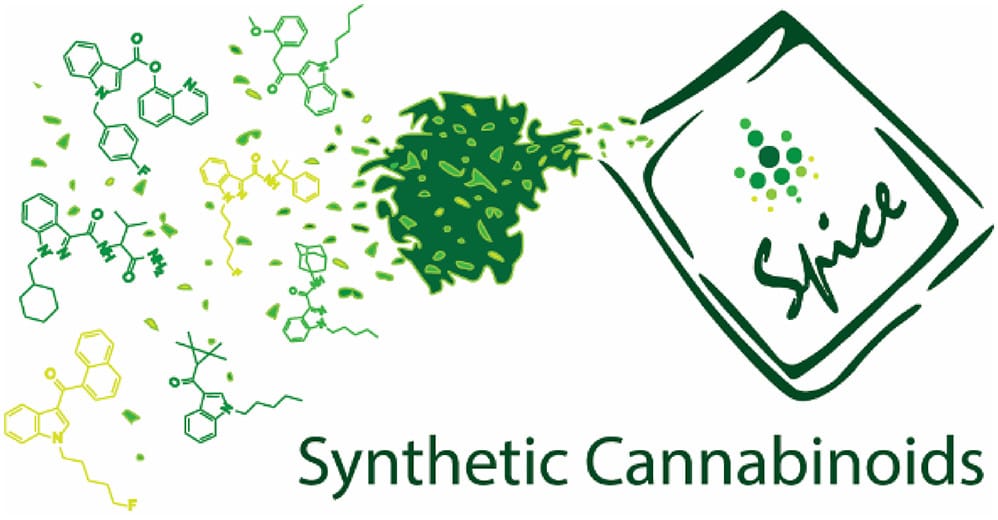
Here’s a clear breakdown of exactly how synthetic cannabinoids differ from actual cannabis, why those differences matter so much more than the marketing suggests, and why “acts kind of like weed” is one of the most misleading claims in recreational drug culture right now.
They Don’t Come From the Same Place
Cannabis is a plant. Whatever form it takes, flower, oil, edibles, tinctures, its psychoactive compounds, primarily THC, are produced naturally by that plant through millions of years of evolution. It’s a known quantity, chemically speaking, studied for decades and, in a growing number of places, grown and sold under actual regulatory oversight.
Synthetic cannabinoids start somewhere completely different: a chemistry lab. A state health resource puts it plainly, describing these substances as laboratory-made compounds marketed by illicit manufacturers as being like THC, despite bearing no resemblance in chemical structure to plant-based THC from the cannabis plant. The plant material you actually see in a K2 package, the dried leaves and shredded herbs that make it look like loose-leaf tea or potpourri, isn’t cannabis at all. It’s usually just an inert base, sprayed with the actual synthetic chemical that does the work. The “herbal” appearance is essentially cosmetic.
“Cannabinoid” Doesn’t Mean What People Assume It Means
A lot of the confusion here comes down to a single word doing more work than it should. Synthetic cannabinoids are called cannabinoids not because they come from cannabis or share its chemistry, but because they act on the same brain receptors that cannabis compounds do. A federal health resource makes this distinction directly, noting that while these chemicals are called cannabinoids because they act on the same brain cell receptors as THC, the hundreds of known synthetic cannabinoid chemicals and THC are actually different chemicals altogether, and synthetic cannabinoids may affect the brain in different and unpredictable ways compared to marijuana.
Think of it like this: two completely different keys can sometimes turn the same lock. That doesn’t make them the same key. Synthetic cannabinoids and THC both happen to fit into the CB1 and CB2 receptors in your brain and body, but the shape, structure, and behavior of those two “keys” are nothing alike.
The Way They Bind to Receptors Is Fundamentally Different
This is the piece of pharmacology that explains most of why synthetic cannabinoids behave so differently in the body, and it’s worth understanding clearly.
THC is what’s called a partial agonist at cannabinoid receptors. In plain terms, it activates those receptors up to a point, and then it plateaus, no matter how much someone uses. There’s a built-in ceiling to how strongly it can stimulate the receptor.
Most synthetic cannabinoids are full agonists instead. A toxicology review studying this drug class notes that because these synthetic compounds act as full agonists at cannabinoid receptors, they are much more potent than natural cannabis and have been increasingly associated with acute and chronic intoxications, and death. There’s no equivalent ceiling. These chemicals can drive receptor activation much harder and much further than THC ever could, which is a huge part of why the resulting effects are so much more intense and unpredictable.
The Chemistry Keeps Changing, and That’s the Point
This constant chemical churn isn’t an accident, it’s largely a deliberate response to drug law. As soon as regulators identify and ban a specific synthetic cannabinoid compound by name, manufacturers can tweak the molecular structure slightly and produce a new, technically unbanned variant with similar effects. One review tracking this trend in Europe found that a total of 207 distinct synthetic cannabinoid substances were identified between 2008 and October of 2020 alone, with new compounds continuing to show up every year. There is no equivalent phenomenon in the cannabis world. A strain of cannabis grown this year contains fundamentally the same THC molecule as a strain grown a decade ago. That’s simply not true of “K2” from one month to the next.
Potency and Dosing Are Nothing Alike
Regulated cannabis products, at least in legal markets, come with lab-tested potency information. Even in illicit markets, natural cannabis has biologically constrained THC levels, since the plant itself can only produce so much of the compound.
Synthetic cannabinoids have no such constraint, and no equivalent quality control. Because manufacturers spray a liquid chemical solution onto plant material by hand, without any standardized process, concentration can vary wildly, not just from one batch to the next, but within a single package. One recovery resource notes plainly that the inconsistent chemical distribution makes smoking these substances very hazardous, since different portions of the same package can vary in strength, causing accidental overdoses.
The Health Risks Are a Different League Entirely
This is really where the “not the same” argument stops being a technicality and becomes a matter of real, documented harm. A systematic review of synthetic cannabinoid toxicity found that these products lead to greater health risks than cannabis, with greater toxicity and higher addiction potential than THC itself, and that early cases of intoxication and death related to these substances highlight the inherent danger accompanying their use.
The specific list of documented harms goes well beyond what’s typically associated with natural cannabis use. Research reviewing this drug class has linked it to kidney injury, a severe cyclic vomiting condition sometimes called hyperemesis syndrome, dangerous cardiovascular effects, respiratory depression, and brain damage. Short-term reactions reported to poison control centers and public health departments include a racing heart, dangerously elevated blood pressure, unconsciousness, tremors, seizures, vomiting, hallucinations, agitation, anxiety, and pale skin. Reports have also linked synthetic cannabinoid use to psychosis, violent behavior, and suicidal thoughts, outcomes that are genuinely rare with natural cannabis but show up with real frequency in the clinical literature on synthetic products.
Tolerance and Dependence Develop Differently, Too
Even the way these drugs create dependence isn’t a simple carbon copy of cannabis. Regularly using synthetic cannabinoids can lead to tolerance, meaning larger amounts are needed over time to achieve the same effect, and research suggests tolerance to synthetic cannabinoids can develop considerably faster than tolerance to natural THC. That faster tolerance ramp pushes people toward heavier use more quickly, which then compounds the dosing inconsistency problem described above, since more product means more exposure to a chemical whose actual concentration is essentially unknowable.
Legal Status Reflects the Difference, Too
The regulatory picture for these two substances looks completely different, and that difference says something important on its own. In the United States, cannabis is legal for medical use in the large majority of states and for recreational use in a substantial and growing number of them, with clear rules, licensing, and testing requirements in the places where it’s legal.
Why the “Legal Alternative” Framing Persists Anyway
If synthetic cannabinoids are this much riskier, it’s worth asking why they’re still around and still popular. A few factors explain it. These products are widely available, sold in convenience stores, smoke shops, and online, often under a “not for human consumption” label that exists to dodge FDA oversight rather than to warn anyone away from actual use. They’ve also historically been popular specifically because users believe them to be legal and relatively safe, a belief the marketing works hard to reinforce even though it doesn’t hold up.
There’s also a practical incentive that has nothing to do with the drug experience itself: detectability. People have reported using synthetic cannabinoid products specifically because they’re mostly undetected by routine urine drug screens, unlike natural cannabis, which is reliably caught by standard testing. For people facing drug tests, whether through employment, probation, or the military, that detection gap has been a real draw, even though it says absolutely nothing about the drug being safer to use.
What This Means If You’re Weighing the Two
If you’ve been treating K2 or Spice as a rough equivalent to cannabis, whether because it’s legal where you live, cheaper, or harder to get caught using, it’s worth recalibrating that assumption based on what the actual evidence shows. These aren’t two versions of the same drug with different price tags and legal statuses. They’re two fundamentally different substances that happen to interact with the same part of your brain, one with decades of research behind it and increasing regulatory oversight, and the other a constantly shifting, unregulated chemical experiment with a well-documented history of serious medical and psychiatric harm.
A Quick Note on Hemp-Derived Cannabinoids Like Delta-8
It’s worth clearing up one related point of confusion, because the terminology in this space gets messy fast. Products like Delta-8 THC, now widely available through the legal hemp market, sometimes get lumped in with “synthetic cannabinoids” in casual conversation, but they’re a genuinely different category from K2 or Spice.
Delta-8 is a real cannabinoid. It occurs naturally in the cannabis plant in small amounts, and commercial versions are typically made by chemically converting hemp-derived CBD into Delta-8 through a lab process. That process is a conversion of an existing, naturally occurring cannabinoid molecule, not the creation of an entirely new synthetic compound from scratch. One academic resource draws this line clearly, noting that cannabinoids from federally legal hemp are not comparable to synthetic designer drug molecules like K2, since they’re completely different in chemical structure and in the effect they have on the central nervous system. The same source adds an important framing: whether a cannabinoid is naturally extracted from a plant or produced through a lab conversion process, the resulting molecule is still a genuine cannabinoid, and it’s important to distinguish these hemp-derived compounds from actual designer drugs like K2, since consuming those designer chemicals carries a different, generally higher, level of risk.
Frequently Asked Questions
If synthetic cannabinoids act on the same receptors as THC, why do they cause so many more medical emergencies? It comes down to how strongly they activate those receptors. THC is a partial agonist, meaning its effects level off at a certain point no matter the dose. Most synthetic cannabinoids are full agonists, capable of driving those same receptors much further, which translates into far more intense and unpredictable physical and psychiatric effects, including seizures, severe cardiovascular strain, and psychosis.
Is it true that some synthetic cannabinoids started out as legitimate research chemicals? Yes. Several of the compounds found in K2 and Spice, including some of the earliest and most well-studied ones, were originally synthesized by researchers studying the endocannabinoid system for legitimate scientific purposes, never intended for human use. Those compounds later ended up in recreational drug markets without the involvement or knowledge of the researchers who created them.
Is Delta-8 THC the same thing as a synthetic cannabinoid like K2? No, and this distinction matters. Delta-8 is a genuine cannabinoid, either occurring naturally in trace amounts in the cannabis plant or produced by converting hemp-derived CBD in a lab. K2’s synthetic cannabinoids are an entirely different class of designer chemicals with no natural cannabinoid origin at all, engineered from scratch specifically to activate cannabinoid receptors.
The Bottom Line
The name “synthetic marijuana” has done a lot of damage by suggesting these products are just a manufactured stand-in for cannabis, similar in kind and just different in origin. They’re not. Synthetic cannabinoids are structurally distinct lab-made chemicals that happen to activate the same receptors THC does, generally far more aggressively, with no consistent formula, no quality control, and a risk profile that includes seizures, psychosis, kidney injury, and cardiac events well beyond anything typically seen with natural cannabis use. If you’re trying to understand the actual difference between these two substances, the honest answer isn’t “one is legal and one isn’t.” It’s that one is a known, plant-derived compound with a real safety track record, and the other is an unpredictable chemical gamble every single time.