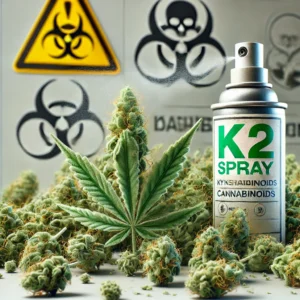

If you’ve come across the term “K2 paper” and assumed it’s just another form of weed, you’re not alone — and you’re also not correct. K2 paper looks like it belongs in the same category as cannabis. It’s smoked, it’s often described using cannabis slang, and sellers sometimes market it as a “legal” or “herbal” alternative to marijuana. But underneath the surface, K2 paper and cannabis are fundamentally different products, made of different chemicals, with very different risk profiles. Understanding that difference isn’t just academic — it can be the difference between a predictable experience and a medical emergency.
This article breaks down what K2 paper actually is, how it differs from cannabis at a chemical level, why it tends to be far more dangerous, and what to know if you or someone you care about encounters it.
What Is K2 Paper, Exactly?
Unlike traditional K2/Spice products, which are usually plant material (dried herbs or shredded leaves) sprayed with synthetic chemicals, K2 paper takes the same synthetic compounds and applies them to paper. That paper might then be smoked, chewed, or otherwise consumed. The appeal, from a manufacturer’s standpoint, is that paper is cheap, easy to conceal, easy to mail, and doesn’t look like a drug to an untrained eye — a folded piece of paper can pass as stationery, a letter, or a book page.
The Core Difference: Chemistry, Not Just Packaging
The most important thing to understand is that K2 paper and cannabis are not variations on the same drug. They are different substances that happen to interact with some of the same biological machinery in your body.
Cannabis contains naturally occurring cannabinoids — primarily THC (delta-9-tetrahydrocannabinol) and CBD (cannabidiol) — produced by the plant itself and studied extensively over decades. THC is what’s known as a partial agonist at cannabinoid receptors in the brain, meaning it binds to those receptors but only triggers a partial, capped response. That built-in ceiling is part of why cannabis overdose deaths from THC toxicity alone are exceptionally rare.
Synthetic cannabinoids, the chemicals found in K2 paper, are different molecules entirely — created in a lab and never found in nature. They act on the same cannabinoid receptors in the brain that THC acts on, but far more intensely. Where THC is a partial agonist, most synthetic cannabinoids are full agonists, triggering a much stronger, more complete activation of those receptors. Some research puts them at up to several hundred times more potent than cannabis, with a binding affinity for those receptors several times greater than THC’s.
Why “Legal” Doesn’t Mean Safe
One of the most persistent myths about K2 paper — and synthetic cannabinoids generally — is that because they were historically sold legally in some places, they must be safer, or at least regulated, tested, and consistent. In reality, K2 is a designer drug, meaning its chemical composition is deliberately similar to, but not identical to, cannabis. That slight structural difference has historically kept it outside the legal definitions used to classify cannabis as a controlled substance, even in places where cannabis itself remains illegal.
That legal gray area has nothing to do with safety. If anything, it’s the opposite. Because synthetic cannabinoid formulas change constantly — often specifically to stay one step ahead of drug scheduling laws — there’s no consistency between batches, brands, or even different papers from the same batch. These products are typically made by spraying a cocktail of lab-made cannabinoids onto plant material or, in this case, paper, and the exact chemical mixture can vary significantly from one batch to the next. A user has essentially no reliable way to know which synthetic compound they’re consuming, at what concentration, or how it was manufactured.
The Health Risks Are Not Comparable
It’s tempting to think of K2 paper as “diet weed” or a rougher version of the same high. The research doesn’t support that framing. Evidence consistently shows that synthetic cannabinoid use leads to greater health risks than cannabis use, with synthetic cannabinoids associated with greater toxicity and higher addiction potential than THC itself.
Some of the documented effects associated with synthetic cannabinoid use include:
- Severe anxiety and panic that can escalate quickly and unpredictably
- Psychosis, paranoia, and hallucinations, even in people with no prior history of psychiatric symptoms
- Seizures, which are rarely if ever associated with cannabis use alone
- Rapid heart rate, chest pain, and in some cases cardiac damage
- Agitation and violent or erratic behavior
- Kidney injury, which has been documented in clusters of synthetic cannabinoid users
- Suicidal ideation in more severe psychological reactions
Part of what makes these outcomes so hard to predict is that synthetic cannabinoids aren’t a single substance — they’re a constantly shifting category of chemicals, and there remains limited scientific knowledge of the toxicology of many individual Spice/K2 ingredients, even after years of research attention. When a product’s chemistry is a moving target, so is its safety profile.
This isn’t a hypothetical concern. In May 2018, more than 50 people in Brooklyn overdosed on K2 within the span of just a few days, an event serious enough that New York’s governor announced a multi-agency public health response. Mass-casualty events like that simply don’t happen with cannabis alone.
Why People Confuse the Two
Given how different these substances are pharmacologically, it’s fair to ask why the confusion persists. A few reasons stand out:
Shared vocabulary. Terms like “synthetic marijuana,” “fake weed,” and “herbal incense” all borrow cannabis language, which primes people to think of K2 as a variant of weed rather than a categorically different drug.
Deliberate marketing. Sellers of synthetic cannabinoid products have historically leaned into the comparison to cannabis specifically because it makes the product sound more familiar and less risky than it actually is. That’s a marketing choice, not a pharmacological fact.
Scientific naming confusion. From a strict scientific standpoint, “synthetic marijuana” doesn’t really exist as a category — the compounds involved aren’t marijuana analogs so much as unrelated chemicals designed to hit the same receptors, which adds to public confusion about what these products actually are.
What About Delta-8 or Other “Alternative” Cannabinoids?
It’s worth drawing one more distinction, since K2 paper sometimes gets lumped in with newer, more mainstream cannabinoid products like delta-8 THC. Naturally occurring cannabinoids like delta-8 THC and its isomers are chemically distinct from synthetic designer drugs like K2/Spice, and it’s important not to conflate the two — cannabis-derived cannabinoids have a long history of use, while designer drugs like K2 are a much newer and less understood category with a meaningfully different risk profile. That said, quality control still matters enormously even for legal hemp-derived products, and sourcing from reputable, third-party-tested manufacturers remains important regardless of which cannabinoid is involved.
The Bottom Line
If you encounter K2 paper, or you’re trying to help someone who has, the safest assumption is that you have no reliable way to know what’s actually in it or how your body will respond. That unpredictability, more than any single statistic, is what separates it from cannabis — and what makes it worth taking seriously.
This article is intended for informational and educational purposes. If you or someone you know is struggling with substance use, a conversation with a healthcare provider or a substance use helpline can be a good first step toward support.