Here’s an actual breakdown of where these two substances overlap, where they diverge, and why the difference matters a lot more than the marketing would have you believe.
The Core Difference: One Comes From the Plant, One Doesn’t
This is the single most important distinction, and it’s worth understanding clearly before anything else.
Delta-8 THC is a real, naturally occurring cannabinoid. It’s found in hemp plants, regulated federally under the 2018 Farm Bill, and it exists naturally as one of well over a hundred cannabinoids the cannabis plant produces on its own, just in tiny quantities, usually below 1% of the raw plant material.
K2 isn’t a cannabinoid at all. It’s an entirely synthetic chemical, engineered from scratch, with zero connection to the cannabis plant. It’s a lab-created compound sprayed onto plant material, and it has no relation to cannabis and no federal safety oversight whatsoever. Sticking with that diamond comparison, if Delta-8 is a lab-grown diamond, K2 is more like cubic zirconia — it looks similar from a distance, but it isn’t the same material, and it never was.
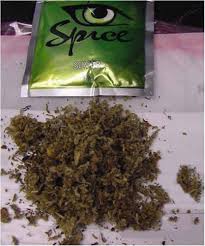
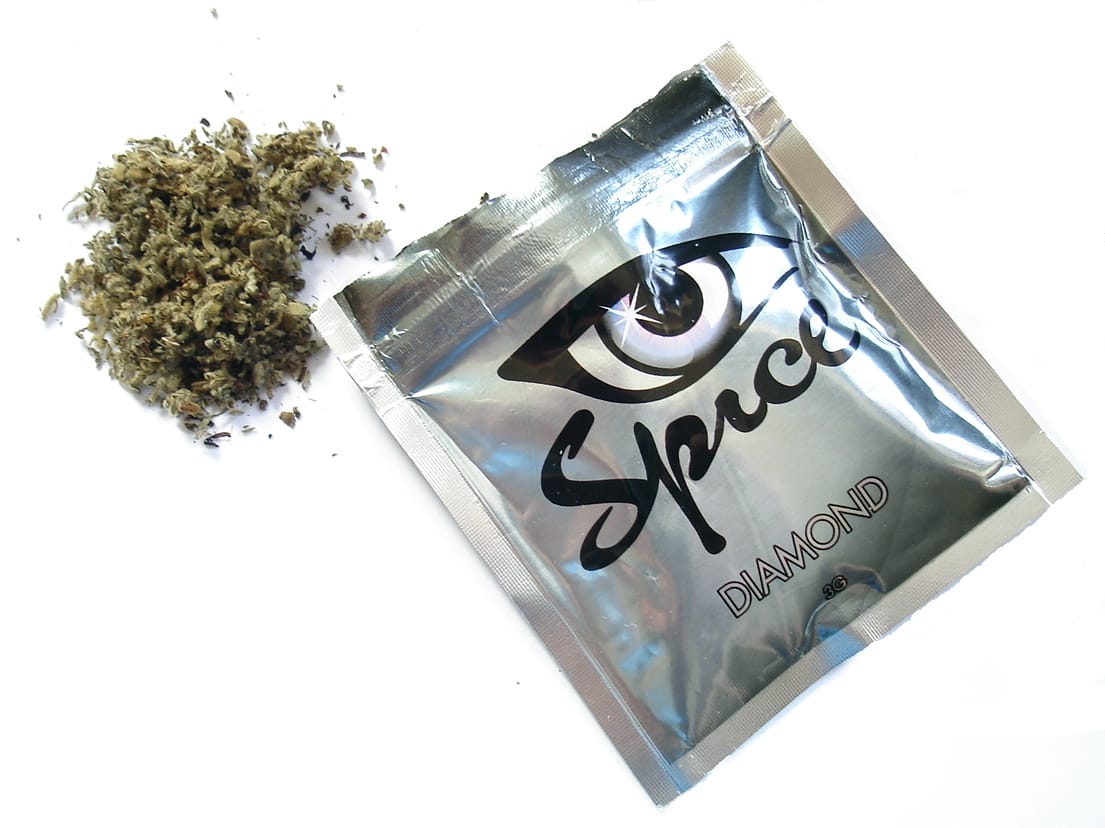
Even the plant matter inside a K2 package is a bit of a red herring: it’s usually just dried, unrelated herbs sprayed with the actual active chemical, which means the “herbal” look of the product is basically cosmetic. Whatever’s actually getting someone high has nothing to do with the plant it’s sitting on.
Chemical Structure: A Tiny Tweak vs. an Entirely Different Molecule
Delta-8 and Delta-9 THC (the compound in regular marijuana) are almost identical at the molecular level. The entire structural difference comes down to the location of one double bond on the carbon chain — Delta-8 has it on the eighth carbon, Delta-9 has it on the ninth. That’s it. One position, shifted by one spot.
K2’s synthetic compounds aren’t a “shifted” version of anything. They’re a completely different chemical family altogether. K2 products typically contain a rotating cast of unrelated lab-made compounds — names like JWH-018, AB-FUBINACA, and 5F-ADB show up often — and these bind to the same cannabinoid receptors in the brain, but with far more intensity than anything naturally occurring in cannabis.
Effects: Milder and Predictable vs. Intense and Erratic
Because Delta-8 is structurally so close to Delta-9, its effects tend to track cannabis fairly closely, just turned down a notch. Research comparing the two found they share very similar receptor binding, with Delta-8 landing at around two-thirds the potency of Delta-9. Most people describe it as a gentler, clearer-headed high than regular weed — noticeably psychoactive, but within a familiar and fairly predictable range.
K2 is a different animal entirely. Because its synthetic compounds latch onto cannabinoid receptors so much more aggressively, the resulting experience is both stronger and far less predictable. This isn’t a small distinction — reports tied to K2 use include hallucinations, seizures, heart attacks, stroke, and even death. That’s a meaningfully different risk category than “slightly less intense than regular weed.”
Consistency and Quality Control: Imperfect vs. Nonexistent
Neither Delta-8 nor K2 gets the kind of testing and oversight you’d find in a licensed cannabis dispensary, but there’s a real gap between “imperfect” and “nonexistent.”
A researcher quoted on the subject explained the root cause plainly: the chemists doing this conversion aren’t always skilled at it, especially since it’s happening outside any FDA or state oversight, and sometimes the resulting product contains leftover Delta-9 or other synthesis byproducts that shouldn’t be there. That’s a legitimate quality control problem worth taking seriously, but it’s a problem of degree — how much Delta-8, plus what unwanted extras came along for the ride — rather than a total mystery about what family of substance you’re even dealing with.
K2 doesn’t offer even that baseline of predictability. The amount of active chemical sprayed onto the plant material varies wildly from batch to batch, and because manufacturers keep swapping the actual synthetic compound to dodge new laws, a product sold under the same name today might contain an entirely different chemical than the one sold last month. With Delta-8, the compound itself is usually consistent even when the labeled potency isn’t. With K2, both the compound and the potency are up for grabs every single time.
Legal Status: A Federal Framework vs. a Constant Game of Catch-Up
That said, the picture isn’t uniform. More than a dozen states have banned or heavily restricted Delta-8 specifically, and it remains part of a broader category of hemp-derived intoxicants that faces almost no meaningful oversight despite producing effects similar to regular marijuana.
K2’s legal history is a different kind of mess — not really a debated gray area so much as an active chemical arms race. Manufacturers only need to tweak the molecular structure slightly to turn a banned compound into a technically new, unbanned one, and the laws have consistently struggled to keep pace with how quickly that happens.
Various specific K2 compounds have been banned by name over the years, but because the formula can shift overnight, “legal” or “illegal” for any given batch of K2 is more of a temporary snapshot than a stable classification, unlike Delta-8’s comparatively settled federal hemp status.
Drug Testing: Both Can Be Detected, Just Not the Same Way
Here’s a common misconception worth clearing up: people sometimes assume both K2 and Delta-8 are invisible to drug tests simply because they’re both marketed as legal. That’s not true for either one, and definitely not in the same way.
K2, on the other hand, became popular in large part because standard THC panels generally can’t detect it. Its synthetic compounds are structurally different enough from THC that they don’t reliably trigger the antibody-based tests used in routine screening.
That detection gap has historically been a big part of K2’s appeal for people in testing-heavy situations, which is worth pointing out because it’s a very different kind of “advantage” than anything to do with the drug actually being safer or better.
Who’s Actually Using These, and Why It Matters
The demographic picture for both substances points to a similar concern: young people are drawn to both, often based on the mistaken assumption that “legal” automatically means “safe.” Recent research found that over 11% of graduating high school seniors reported having used Delta-8, and packaging for these products frequently resembles ordinary snacks, which raises the odds of accidental exposure among kids.
K2 tends to get lumped right in with Delta-8 and similar look-alike products as part of one broader “gas station weed” category, and products across that whole category, including K2, Delta-8, and various other synthetic and semi-synthetic cannabinoids, show up increasingly often in emergency room visits among both teens and adults.
Side-by-Side Summary
| Delta-8 THC | K2 / Spice | |
|---|---|---|
| Origin | Naturally occurring hemp cannabinoid, chemically converted from CBD | Fully synthetic lab chemical, no relation to cannabis |
| Chemical structure | Nearly identical to Delta-9 THC, one double bond shifted | Structurally unrelated compounds, like JWH-018 or AB-FUBINACA |
| Potency | Roughly two-thirds as potent as Delta-9 THC | Often far more potent than THC, binds receptors much more aggressively |
| Main quality issue | Mislabeled potency, unwanted synthesis byproducts | Entirely unknown, inconsistent chemical makeup batch to batch |
| Legal framework | Federally legal under the 2018 Farm Bill, banned in some states | Patchwork bans by named compound, with manufacturers reformulating to dodge them |
| Standard drug test | Generally detected | Generally not detected |
| Documented severe risks | Mislabeling related overdose, contamination | Seizures, heart attacks, stroke, psychosis, death |
The Bottom Line
Delta-8 and K2 get bundled together constantly because they’re sold in the same places, chase the same “legal high” niche, and both come with legitimate safety concerns. But underneath the marketing, they’re not remotely the same kind of product. Delta-8 is a genuine cannabinoid, chemically almost identical to the THC in regular cannabis, sold under an actual, if contested, legal framework, and detectable on standard drug tests. K2 is a synthetic chemical experiment with no cannabis pedigree at all, no consistent formula, a legal status that changes as fast as manufacturers can tweak the molecule, and a track record of serious medical emergencies that Delta-8 simply doesn’t share.