Table of Contents
Here’s what it actually is, what to look for, how it gets tested, and how to handle a suspected sample without putting yourself at risk.
What Is “K2 Paper,” Exactly?
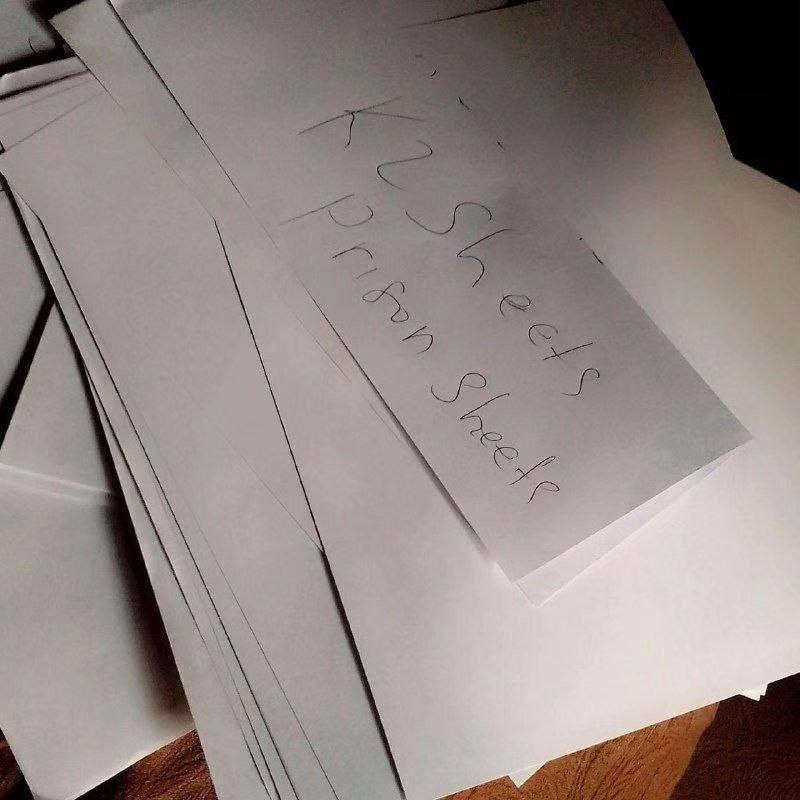
The basic idea is simple, if a little unsettling: take an ordinary piece of paper — a letter, a greeting card, a kid’s drawing, a page torn out of a coloring book — soak it in liquid synthetic cannabinoids, let it dry, and it looks like nothing happened at all. A New York State clinical resource for health providers describes this directly, noting that <cite index=”21-1″>”jail paper” is a term for paper laced with K2, and it’s become popular precisely because it can be soaked in liquid K2, dried, and mailed or shared with incarcerated people the same way any normal piece of mail would be.</cite> Once it reaches someone, <cite index=”21-1″>it gets torn into small pieces and smoked or ingested to get high.</cite>
The reason this method took off isn’t complicated — it’s just really hard to catch. Mail moves through facilities constantly, in huge volumes, and unlike a bag of dried herbs or a vape cartridge, paper doesn’t trip any visual alarm bells. It can be mailed like a normal letter, tucked into a book, or passed along in a stack of paperwork without anyone thinking twice.
And the money involved is a big part of why this hasn’t gone away. One resource on correctional detection technology notes that <cite index=”20-1″>a single one-inch square of K2-soaked paper can sell for as much as $400 inside a prison — which means one full sheet can be worth over $30,000.</cite> When contraband is worth that kind of money, people get creative, and facilities have had to keep upgrading how they screen incoming mail just to keep pace.
Physical Signs That Paper May Be Laced With K2
Discoloration or staining. This is probably the most commonly reported tell. In one documented case at a U.S. correctional facility, officers sorting incoming mail <cite index=”20-1″>noticed discoloration in different spots on a piece of paper, which suggested something had been dissolved into it,</cite> and that was enough to get the mail flagged for closer screening. So if a page has odd blotches, faint stains that look almost like watermarks, or a slightly yellow or brownish, greasy-looking tint that doesn’t match ordinary wear or a coffee spill — that’s worth a second look.
A texture that’s a little off. Soaking paper in liquid and letting it dry can leave it feeling subtly different — stiffer than you’d expect, a bit waxy or shiny in patches, or just not matching the rest of the page or envelope.
Paper that feels heavier or thicker than it should. If the soaking wasn’t done evenly, you might notice the paper feels stiffer or a bit heavier in places compared to a normal sheet.
Context that just feels off. Sometimes the paper itself looks completely normal, and the real red flag is the situation around it — an unsolicited “gift” of a hand-drawn picture mailed to someone incarcerated, a coloring page that seems to matter way more to someone than it should, that kind of thing.
How Paper Actually Gets Tested for K2
If you genuinely suspect a piece of paper has been treated with synthetic cannabinoids, there are a few different ways to check, ranging from cheap kits to full lab work.
Drug reagent test kits. These are probably the most accessible option out there. As one resource on testing methods puts it, <cite index=”26-1″>one of the easiest ways to check for synthetic cannabinoids is with a drug reagent test kit,</cite> which works through a simple color-change chemical reaction. A commercial version of this kind of test works by having you <cite index=”29-1″>put a small amount of the material into the test, at which point an ampoule changes color,</cite> and then you <cite index=”29-1″>match that color against a reference chart included with the kit.</cite> One catch worth knowing: you usually have to prep the sample first — the manufacturer specifically notes you should <cite index=”29-1″>crush or grind the paper before testing it, since smaller pieces give a more consistent result than larger chunks.</cite>
Specialized test strips. There are also dedicated test strips built for synthetic cannabinoids specifically, offering another cheap, at-home option — with roughly the same limitation of only covering certain known compound groups.
Handheld spectroscopy devices. Correctional facilities and other high-security settings often reach for something more advanced. In the case mentioned earlier, officers actually had handheld Raman spectroscopy devices on hand, but found <cite index=”20-1″>those optical tools weren’t great at picking up drugs embedded in paper specifically.</cite> Instead, they switched to <cite index=”20-1″>trace sampling swabs from a more sensitive device, swabbing directly over the discolored spots on the paper and envelope,</cite> and that’s what actually confirmed the substance was there.
Why You Shouldn’t Try to “Test” It Yourself by Touching or Smelling
This part’s worth being blunt about: don’t try to informally check suspected K2 paper by handling it a lot, licking it, or holding it up to your face to smell. It’s not a real test, and it’s not a safe habit to get into.
If you come across something you suspect is laced:
- Don’t handle it more than you have to — gloves if you need to move or bag it
- Don’t smell it, taste it, or lick it to “check”
- Seal it in a bag or container if you need to hold onto it for testing or reporting
- Wash your hands well afterward
- If you’re somewhere with an actual protocol for this (a school, a facility, a workplace mailroom), follow it — that usually means handing it off to security or a supervisor rather than dealing with it yourself
What to Do If You Confirm — or Strongly Suspect — K2-Laced Paper
What comes next really depends on where you are and who’s involved.
In a correctional or institutional setting, just follow whatever protocol already exists. That typically means bagging the item, writing down where and how it turned up, and handing it to a security or investigations team with the right tools — ideally something lab-grade rather than a guess based on how it looks.
In a mailroom or workplace, treat unexplained staining or texture issues on incoming mail the same way you’d treat any suspected contraband: isolate it, don’t touch it more than you need to, and loop in security or management instead of trying to figure it out on your own.
If someone’s already smoked or ingested material from suspected K2 paper, this stops being a detection question and becomes a medical one. Watch for the signs that show up with synthetic cannabinoid use more broadly — rapid heartbeat, chest pain, seizures, severe confusion, hallucinations, or someone losing consciousness — and treat any of that as a 911 emergency, full stop. Given how unpredictable these compounds are, even a small amount from a laced piece of paper can trigger something serious.
Why This Matters
K2 paper is a pretty clear sign of how far synthetic cannabinoid distribution has come from its early days of gas-station “incense” packets. One resource on correctional drug trends notes that <cite index=”20-1″>synthetic cannabinoids rank among the most commonly abused substances in prisons, alongside cocaine, heroin, marijuana, and diverted prescription medications,</cite> and facilities genuinely struggle to screen the sheer volume of mail moving through every day. And it’s not really a prison-only problem — the same basic trick (soak something ordinary in a synthetic cannabinoid solution) could show up anywhere paper changes hands, which is reason enough to know the signs even if “jail paper” isn’t a phrase you’ve run into before now.
A Few Common Questions
Can you actually spot K2 on paper just by looking at it? Sometimes, but don’t count on it. Discoloration or a weird texture can be a clue, but plenty of laced paper looks completely normal — which is exactly why it works so well as a smuggling method.
What’s the most reliable way to confirm it? A real lab, using something like GC/MS. It’s the only method that tells you exactly what compound you’re dealing with instead of a rough yes-or-no.
Is it dangerous to just touch paper that might have K2 on it? Briefly touching it probably won’t do much, but since potency is so inconsistent, it’s smart to avoid repeated or unnecessary contact — and definitely don’t smell or taste it to check.
Why is this specifically such a big deal in prisons? Because mail is nearly impossible to screen perfectly at scale, and because a single treated sheet can be worth an absurd amount of money once it’s cut up and sold piece by piece — which keeps people finding new ways to get it past security.