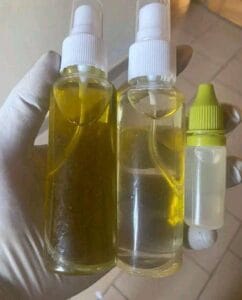

WHY SYNTHETIC SPRAY VARIES IN STRENGTH
Introduction
Across online forums, product reviews, and safety reports, one theme shows up repeatedly: synthetic spray products are inconsistent. Two items that look identical can produce completely different outcomes. Even within a single package, effects may vary from one portion to another.
This inconsistency is not a single-issue problem. It’s the result of stacked variability—chemical formulation, mixing precision, application technique, environmental exposure, storage conditions, and individual physiology all interact. The outcome is a system where small changes at any stage can amplify into large differences in perceived strength.
This article breaks down those layers. Instead of treating “strength” as a mystery, we map the specific mechanisms that drive variability, explain why they matter, and outline how to evaluate product transparency from an information standpoint.
CHAPTER 1: WHAT “STRENGTH” MEANS IN PRACTICE ON WHY SYNTHETIC SPRAY VARIES IN STRENGTH
1.1 Three Components of Strength
“Strength” is often used loosely, but it’s actually a combination of:
- Concentration: how much active compound is present
- Potency: how strongly that compound interacts with biological targets
- Delivery: how efficiently the compound is absorbed
A change in any one of these can shift the overall experience. When all three fluctuate at once, variability becomes pronounced.
1.2 Why Perceived Strength Differs From Measured Content ON WHY SYNTHETIC SPRAY VARIES IN STRENGTH
Two samples with the same measured concentration can feel different because:
- Distribution is uneven (hot spots vs light areas)
- Degradation has altered active fractions
- Absorption differs due to the carrier material
- Individual response varies
So “same amount” does not guarantee “same effect.
CHAPTER 2: CHEMICAL VARIABILITY AT THE SOURCE ON WHY SYNTHETIC SPRAY VARIES IN STRENGTH
2.1 Formula Drift and Analog Substitution
In loosely regulated markets, formulations may change over time. Small structural changes in compounds (often called analogs) can produce:
- Different receptor binding strength
- Faster or slower onset
- Shorter or longer duration
- New or amplified side effects
Even when a product name stays the same, the underlying chemistry may not.
2.2 Multi-Compound Blends
Some products include more than one active compound. Interactions between them can be:
- Additive (effects stack)
- Synergistic (effects amplify)
- Antagonistic (effects partially cancel)
This creates non-linear outcomes where doubling the input doesn’t simply double the effect.
2.3 Purity and Impurities
If compounds are not highly purified:
- Trace byproducts may remain
- Degradation products may form
- Stability may decrease
These factors can alter both strength and predictability.
CHAPTER 3: CONCENTRATION AND MIXING ERRORS
3.1 Solution Preparation
Creating a liquid mixture that carries active compounds requires precise measurement and thorough mixing. Without strict controls:
- Concentration can drift from target levels
- Solubility limits may be exceeded
- Particles may not fully dissolve
This leads to inconsistent concentration across the solution.
3.2 Settling and Separation
Over time, some mixtures can:
- Settle
- Separate into layers
- Form micro-clusters
If the solution is not uniform at the moment of application, each application can differ in strength.
CHAPTER 4: APPLICATION TECHNIQUE AND DISTRIBUTION
4.1 Uneven Coverage
When a liquid is applied to a surface, it rarely distributes perfectly:
- Droplets can cluster
- Edges may receive less coverage
- Some areas absorb more quickly
This creates localized concentration differences.
4.2 Absorption by the Carrier Material
Different materials behave differently:
- Porous surfaces may absorb deeply
- Smooth surfaces may retain more on the surface
- Fiber structure can trap or release compounds unevenly
Even within a single sheet or blend, micro-variations in structure can change how much is retained.
4.3 Drying Dynamics
As the solvent evaporates:
- Compounds may migrate
- Edges may concentrate residue
- Airflow can redistribute liquid before it sets
The final distribution is shaped by how and where evaporation occurs.
CHAPTER 5: ENVIRONMENTAL EXPOSURE ON WHY SYNTHETIC SPRAY VARIES IN STRENGTH
5.1 Heat
Heat can:
- Accelerate chemical breakdown
- Reduce active concentration
- Change compound structure
Even moderate temperature differences during storage or transport can affect outcomes.
5.2 Humidity
Moisture can:
- Alter absorption characteristics
- Promote chemical reactions
- Affect stability
Humidity swings can therefore shift strength over time.
5.3 Oxygen and Light
Exposure to air and light can:
- Oxidize compounds
- Trigger photodegradation
- Reduce potency
Products exposed to these elements may weaken—or change character—before use.
CHAPTER 6: TIME AND SHELF LIFE on WHY SYNTHETIC SPRAY VARIES IN STRENGTH
6.1 Degradation Over Time
All chemical systems degrade:
- Active compounds break down
- Ratios shift
- Byproducts form
This means older products are not equivalent to newer ones, even if labeled the same.
6.2 Packaging Quality
Protective packaging matters:
- Airtight seals reduce oxidation
- Opaque materials reduce light exposure
- Moisture barriers stabilize conditions
Weak packaging accelerates variability.
CHAPTER 7: BATCH-TO-BATCH DIFFERENCES
7.1 Lack of Standardization
In tightly regulated industries, each batch is matched to a specification. Without that:
- Inputs vary
- Processes vary
- Outputs vary
This results in batch inconsistency, where each production run differs.
7.2 Scaling Issues
Small-scale and large-scale processes behave differently:
- Mixing dynamics change with volume
- Heat distribution changes
- Timing differences affect outcomes
Scaling without precise controls introduces additional variability.
CHAPTER 8: HUMAN VARIABILITY
8.1 Biological Differences
People differ in:
- Body composition
- Metabolic rate
- Sensitivity to compounds
The same exposure can feel mild to one person and intense to another.
8.2 Contextual Factors
Perceived strength is also influenced by:
- Food intake
- Hydration
- Environment
- Psychological state
These variables can amplify or dampen perceived effects.
CHAPTER 9: WHY VARIABILITY TRANSLATES INTO RISK
9.1 Unpredictable Outcomes
When strength varies:
- Expectations don’t match reality
- Effects may arrive faster or stronger than anticipated
- Experiences become harder to manage
9.2 Cognitive and Physiological Strain
Unexpected intensity can lead to:
- Discomfort
- Disorientation
- Stress responses
The core issue is not just strength—it’s unpredictability
CHAPTER 10: IDENTIFYING TRANSPARENCY SIGNALS on WHY SYNTHETIC SPRAY VARIES IN STRENGTH
10.1 Information Quality
From an informational standpoint, more transparent products typically provide:
- Clear ingredient disclosure
- Batch identifiers
- Storage guidance
Lack of information increases uncertainty.
10.2 Consistency Indicators
While not guarantees, indicators of consistency include:
- Reproducible labeling
- Stable packaging
- Coherent product documentation
Absence of these signals correlates with higher variability.
CHAPTER 11: WHY VARIABILITY PERSISTS IN 2026
11.1 Rapid Market Turnover
Fast product cycles mean:
- Frequent formula changes
- Limited long-term consistency
- Short feedback loops
11.2 Regulatory Lag
Regulation often trails innovation:
- New compounds appear quickly
- Standards take time to develop
- Oversight varies by region
This gap allows variability to persist.
CHAPTER 12: COMMON MISCONCEPTIONS
“Same label means same strength”
Labels don’t guarantee identical composition.
Higher strength equals better quality”
Strength and quality are not the same.
“Variability is minor”
In practice, variability can be significant.
CHAPTER 13: PRACTICAL AWARENESS (NON-INSTRUCTIONAL)
- Treat variability as a core property, not an exception
- Interpret claims cautiously when details are limited
- Recognize that appearance is not a reliable indicator of consistency
FAQ
Why does synthetic spray vary in strength?
Because of differences in chemistry, concentration, application, storage, and individual response.
Can two identical products feel different?
Yes. Distribution, degradation, and human factors can all change the outcome.
Does storage affect strength?
Environmental exposure can reduce or alter active compounds over time.
CONCLUSION
Strength variation in synthetic spray products is not caused by a single issue. It emerges from a chain of variables—chemical composition, concentration accuracy, application uniformity, environmental exposure, time, and human response. Each layer introduces uncertainty; together, they produce the wide variability people observe.
The practical takeaway is straightforward:
Variability is built into the system.
Where consistency controls are limited, outcomes will differ—sometimes significantly.
Is variability predictable?
Not reliably, especially without standardized controls.
Why is this a concern?
Because unpredictability increases the chance of unexpected outcomes.