
Table of Contents
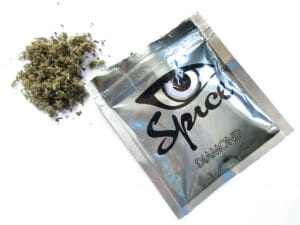
The branding suggests something natural, mild, even playful. The reality inside the brain is almost the opposite. K2 and Spice are not weaker cousins of cannabis. In many ways, they behave like a different drug entirely — one that binds harder, lasts longer, and produces a much less predictable range of effects on the brain, from anxiety and confusion to seizures, psychosis, and in some cases death.
A Brief History of “Fake Weed”
Synthetic cannabinoids weren’t originally designed to get people high. Most of the compounds that ended up in Spice were first synthesized in university and pharmaceutical labs in the 1980s and ’90s as research tools — ways to study the brain’s cannabinoid receptor system without using plant-derived THC. Chemist John W. Huffman, whose initials show up in the compound name JWH-018, developed dozens of these molecules at Clemson University purely for research into receptor pharmacology.
Sometime in the mid-2000s, these lab compounds found their way out of academic supply catalogs and into the illicit drug market. Manufacturers began spraying or soaking them onto shredded plant material — sometimes real herbs, sometimes just inert plant matter — and selling the result as incense. Because the actual psychoactive chemical wasn’t cannabis, it slipped past drug laws that specifically named THC or marijuana. The product got the streetwise name “Spice” in Europe and “K2” in the United States, and it spread quickly through gas stations, smoke shops, and eventually online retailers.
That constant churn is part of why synthetic cannabinoids are so dangerous: the drug you buy today may not be chemically similar to the drug sold under the same brand name last month.
It’s Not “Fake Weed” — It’s a Different Drug
The Cannabinoid Receptor System
To understand what synthetic cannabinoids do, it helps to understand the receptor system they’re hijacking.
The human brain and body have an internal signaling network called the endocannabinoid system. It uses naturally produced chemical messengers (like anandamide) that bind to two main receptor types:
- CB1 receptors — found in very high concentrations throughout the brain and central nervous system, especially in areas involved in memory, mood, coordination, appetite, pain perception, and higher-order thinking.
- CB2 receptors — found mostly in the immune system, though <cite index=”1-1″>research has shown they’re also present in neurons at both presynaptic and postsynaptic terminals, where they appear to play a role in neuropsychiatric effects</cite>.
This system exists to help regulate mood, appetite, pain, memory, and stress responses in a fine-tuned, self-limiting way. THC, the main psychoactive compound in cannabis, works by partially activating CB1 receptors. It’s what’s called a “partial agonist” — it binds to the receptor but doesn’t fully switch it on, which puts a natural ceiling on how intense its effects can get.
Why Synthetic Cannabinoids Hit Differently
Two features make them particularly potent and unpredictable:
They bind more strongly. <cite index=”6-1″>Researchers know that some synthetic cannabinoids bind more strongly than marijuana to the same cell receptors affected by THC, and can produce much stronger effects</cite>. Where THC is a partial agonist, many synthetic cannabinoids are full agonists — meaning they don’t just knock on the receptor’s door, they kick it wide open and hold it there.
They’re structurally inconsistent and full of unknowns. <cite index=”1-1″>Synthetic cannabinoids and their metabolites have been found to possess a higher binding affinity for CB receptors than THC, which implies greater potency, greater harmful effects, and perhaps a longer duration of action</cite>. Compounding the danger, <cite index=”6-1″>the chemical composition of many synthetic cannabinoid products is unknown and can change from batch to batch, meaning products are likely to contain substances that produce dramatically different effects than the user expects</cite>.
What Happens in the Brain: Short-Term Effects
When someone smokes K2 or Spice, the synthetic cannabinoid molecules cross into the bloodstream through the lungs and quickly reach the brain, where they flood CB1 receptors throughout the cortex, hippocampus, basal ganglia, and cerebellum — regions responsible for thought, memory, movement, and emotional regulation.
<cite index=”6-1″>Users report some effects similar to those produced by marijuana</cite>: a sense of relaxation, altered perception, elevated mood, and mild sedation. For some users, at low doses, that may be where it stops.
- Rapid heart rate and chest pain. <cite index=”4-1″>Tachycardia and seizures are among the most common toxicity symptoms reported in cases involving synthetic cannabinoids</cite>.
- Seizures and convulsions. <cite index=”4-1″>Compared to other drugs, synthetic cannabinoids have a higher potential to trigger a convulsive crisis, a decline in consciousness, and significant changes in blood pressure and heart function</cite>.
- Severe anxiety and panic. Waves of intense, often disorienting anxiety are among the most commonly reported acute psychological effects, sometimes escalating into full panic attacks.
- Paranoia and agitation. Users can become suspicious, fearful, or combative, sometimes requiring physical restraint or sedation in emergency settings.
- Confusion and dissociation. A disconnect from reality, time, or one’s own body is common, distinct from the milder perceptual changes typical of cannabis.
- Hallucinations and acute psychosis. In more severe cases, users experience full hallucinations or a break from reality that mimics an acute psychotic episode.
- Vomiting. Nausea and vomiting are frequently reported, sometimes severe enough to require hospital treatment.
- Loss of consciousness. Some users black out entirely, a red flag for serious central nervous system depression.
- Violent behavior. A subset of cases involve dramatic behavioral disturbances, including aggression toward others, which is rarely seen with cannabis itself.
One especially dangerous scenario has emerged in recent years: <cite index=”6-1″>deaths occurring when dangerous synthetic opioids, like fentanyl, are added to synthetic cannabinoid products without the user’s knowledge</cite>. Because these products are manufactured without any regulatory oversight, cross-contamination with other dangerous substances is an ongoing risk that has nothing to do with the cannabinoid itself.
Why Overdose and Bad Reactions Are So Common
Because many of these compounds act as full agonists with a much higher binding affinity, there is no built-in cap on how strongly they can activate CB1 receptors. Combine that with wildly inconsistent manufacturing — where the actual concentration of active drug on a given piece of plant material can vary enormously from one pinch to the next — and you get a recipe for accidental overdose even among experienced users who believe they know their tolerance.
This is compounded by a phenomenon toxicologists have noted: because so many different synthetic cannabinoid compounds have circulated over the years, and because <cite index=”4-1″>the prevalence of neuropsychiatric symptoms has been higher in newer generations of these compounds</cite>, the risk profile of “Spice” as a category has arguably worsened over time rather than stabilized, even as public awareness of the drug has grown.
The Psychosis Connection
While heavy cannabis use has itself been associated with increased psychosis risk in vulnerable individuals, the relationship between synthetic cannabinoids and psychotic symptoms appears to be both more frequent and more severe. Case reports and clinical reviews have repeatedly described new-onset psychotic episodes in people with no prior psychiatric history following synthetic cannabinoid use, as well as the reactivation or worsening of psychotic symptoms in people with pre-existing psychiatric conditions.
Researchers attribute part of this to the full-agonist activity at CB1 receptors, which sit in high density in brain regions tied to perception and reality-testing, including the prefrontal cortex and hippocampus. When these receptors are fully and intensely activated — rather than partially modulated, as with THC — normal filtering and integration of sensory information appears to break down more dramatically.
Cognitive Effects: Memory and Mental Flexibility
Beyond the acute, dramatic crises that land people in emergency rooms, a growing body of research has looked at what happens to the brains of people who use synthetic cannabinoids repeatedly over time — and the picture is not reassuring.
A study specifically examining chronic synthetic cannabinoid users found impairment in two key domains of cognitive function: working memory and mental flexibility. Working memory is the mental workspace we use to hold and manipulate information over short periods — the ability to follow a multi-step conversation, do mental math, or remember why you walked into a room. Mental flexibility (sometimes called cognitive flexibility) is the capacity to shift between different tasks or ways of thinking, adapt to new information, and avoid getting mentally “stuck.”
These impairments are consistent with what’s known about cannabinoid receptor distribution in the brain: CB1 receptors are especially dense in the hippocampus (central to memory formation) and prefrontal cortex (central to planning, judgment, and flexible thinking). Chronic, intense activation of these receptors by potent full-agonist compounds appears capable of disrupting normal function in these circuits over time.
Developing Brains Are Especially Vulnerable
Animal studies exposing adolescent subjects to JWH-018, one of the original and most-studied synthetic cannabinoid compounds, found that this exposure <cite index=”7-1″>led to long-lasting neurobiological changes related to psychotic-like symptoms, with effects that differed depending on sex</cite>. The study specifically examined effects on sensorimotor gating — the brain’s ability to filter and modulate incoming sensory information, a process that is disrupted in schizophrenia and other psychotic disorders — as well as changes to structures called perineuronal nets in the cortex, which play a role in stabilizing neural connections as the brain matures.
The broader implication is troubling: exposure to potent synthetic cannabinoids during the teenage years, when the brain’s circuitry is still being wired, may leave a lasting imprint that echoes the neurobiology of psychotic disorders well after the drug itself has cleared the body. This is a notably different — and more severe — risk profile than what’s typically described for adolescent cannabis exposure, though both carry real concerns for the developing brain.
Why Standard Drug Tests Miss It
One of the reasons synthetic cannabinoids gained early popularity — particularly among people subject to routine drug testing, like members of the military, people on probation, or employees in safety-sensitive jobs — is that standard drug panels are designed to detect THC metabolites, not the dozens of different synthetic cannabinoid compounds circulating on the market.
This created a perverse incentive: people seeking to avoid a positive test for cannabis sometimes turned to Spice or K2 specifically because they believed (often correctly, at least initially) that it wouldn’t show up. That belief pushed a population toward a drug that is arguably far riskier to the brain than the one they were trying to avoid testing positive for, precisely because it was harder to detect.
Addiction and Withdrawal
Contrary to the “harmless herbal blend” branding, synthetic cannabinoids <cite index=”6-1″>can be addictive</cite>. Regular users can develop tolerance, requiring more of the drug to achieve the same effect, and can experience withdrawal symptoms when they stop, including irritability, anxiety, insomnia, and cravings — patterns broadly similar to, but often described as more intense than, those associated with heavy cannabis use.
Treatment is complicated by the fact that <cite index=”6-1″>behavioral therapies and medications haven’t been specifically tested for treating addiction to these products</cite>. Clinicians generally extrapolate from approaches used for cannabis use disorder and other substance dependencies, but there’s no synthetic-cannabinoid-specific, evidence-based treatment protocol the way there is for more established drugs of abuse.
The Toxicology Picture: What Emergency Rooms See
The review’s overall conclusion was blunt: <cite index=”4-1″>synthetic cannabinoids may exhibit higher toxicity than THC and longer-lasting effects, and their use may be especially harmful for people with epilepsy or schizophrenia because of the increased risk of triggering psychiatric and neurologic disorders</cite>. <cite index=”4-1″>Compared to other recreational drugs, synthetic cannabinoids carry a higher potential to trigger convulsive crises, a decline in consciousness, and significant hemodynamic changes</cite> — meaning disruptive effects on blood pressure and circulation that can themselves become medical emergencies.
Why We Still Don’t Fully Understand These Drugs
It’s worth being honest about the state of the science here. Unlike cannabis, which has been studied for decades and involves a relatively well-characterized compound (THC) acting predictably on a well-mapped receptor system, synthetic cannabinoids present a moving target. <cite index=”6-1″>There have been comparatively few scientific studies of the effects of synthetic cannabinoids specifically on the human brain</cite>, in large part because the compounds themselves keep changing faster than research can keep pace.
This means that every time a new synthetic cannabinoid compound hits the market — and given the pace of the chemical cat-and-mouse game with regulators, new variants appear regularly — doctors, poison control centers, and researchers are effectively starting from a position of partial blindness, relying on structural similarity to previously studied compounds to make educated guesses about what a given batch might do to the people using it.
Putting It All Together: What This Means for the Brain
Stepping back from the individual mechanisms and case reports, a few clear themes emerge about what K2 and Spice do to the brain:
The unpredictability is a feature of the drug supply, not just individual biology. Because formulations change constantly and contain unlisted, unregulated chemical compounds, no two packets — even from the same brand — are guaranteed to produce the same experience. This alone makes it far harder for users to gauge safe use compared to cannabis, where at least the primary psychoactive compound is consistent.
Acute risks include seizures, psychosis, and cardiovascular strain, any of which can constitute a medical emergency requiring hospital treatment.
Cognitive effects, including impaired working memory and reduced mental flexibility, have been documented in chronic users, suggesting that repeated use may leave a lasting mark on brain function even outside of acute intoxication episodes.
Adolescent brains appear particularly vulnerable to lasting changes, with animal research linking early-life exposure to long-term, psychosis-like neurobiological changes.
Addiction is real, though treatment protocols remain underdeveloped compared to those available for more established substances.
A Note on Harm and Getting Help
If you or someone you know is using K2, Spice, or similar synthetic cannabinoid products, it’s worth taking seriously the fact that these are not a “safer” or “milder” alternative to cannabis, however they’re marketed or packaged. The unpredictability of what’s actually in any given product is itself one of the biggest dangers, independent of any particular compound’s known effects.
If someone experiences a seizure, loses consciousness, shows signs of severe agitation or hallucinations, or has chest pain or a racing heart after using a synthetic cannabinoid product, that’s a medical emergency and warrants immediate care — calling emergency services or going to an emergency room is the appropriate response, not waiting it out.
This article is intended for general educational purposes and does not constitute medical advice. If you have questions about your own health or substance use, please consult a qualified healthcare provider.